
Keep Your Best Hunting Buddy Safe: A Guide to Hunting Dog Safety
Hunting with your dog is more than just a pastime; it’s a deep connection that spans generations. Picture a pointer, frozen mid-stride, or a tireless retriever bringing back your prize—these dogs are often the heart of the hunt. While some pups seem born with an instinct for the field, others need a lot of patient training to become truly efficient. No matter how seasoned your hunting dog is, making their hunting dog safety your absolute top priority is a must. Our team at Petscarelab put together these crucial tips to keep your four-legged partner safe throughout hunting season.
Get Your Dog in Peak Shape
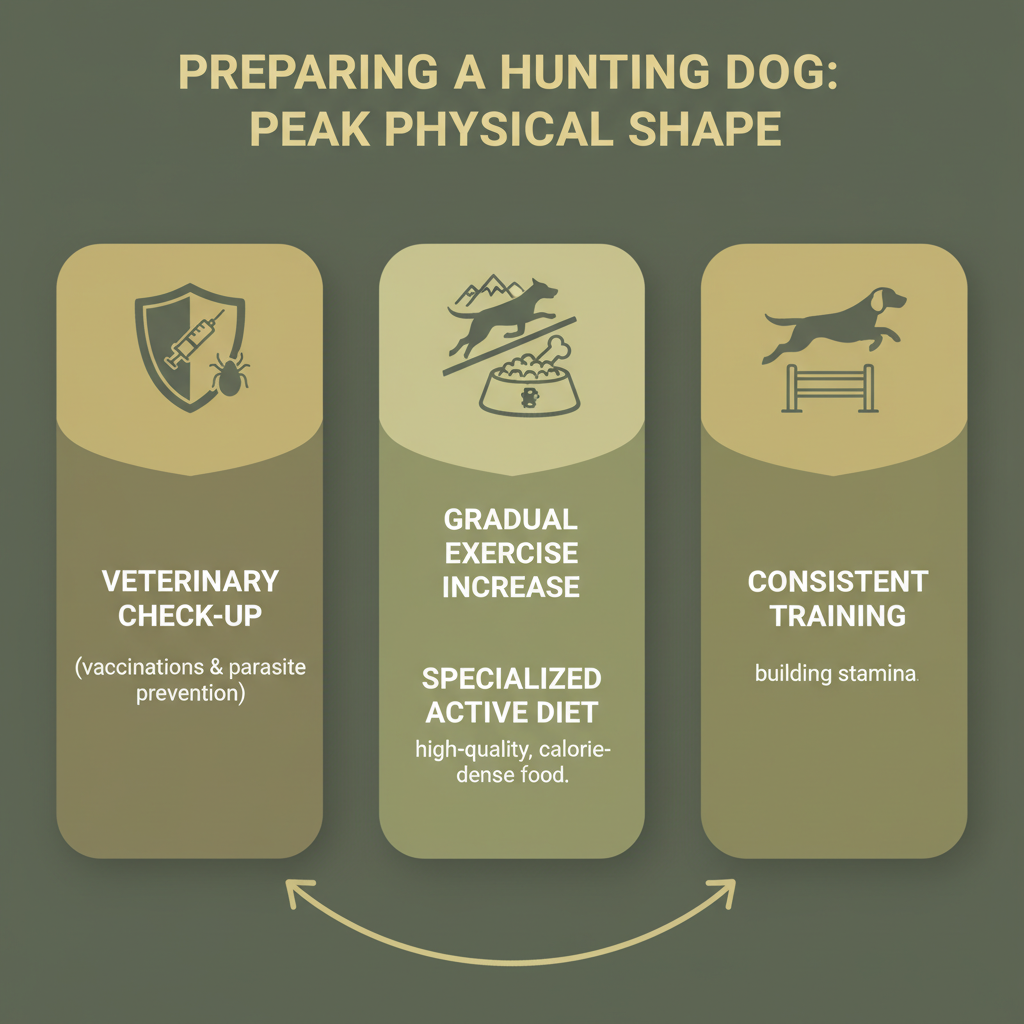
Hunting demands a lot from your dog. They’ll need strong legs and plenty of stamina for long walks, tricky terrain, and often chilly weather.
- Vet Check-up: Before hunting season even begins, schedule a full check-up for your dog. Make sure they’re current on all their shots and parasite prevention. Talk to your vet about any concerns you have about their endurance or overall health.
- Start Slow: Your dog can’t go from a cozy couch potato to a wilderness athlete overnight. Begin with shorter, regular walks, then slowly increase the distance and how tough the terrain is. Try to mimic hunting conditions by walking on uneven ground.
- Fuel Them Right: Feed your dog a high-quality diet designed for active pups. They’ll likely need extra calories during hunting season to keep their energy up.
Master Basic Obedience and Hand Signals
A well-trained dog is a safe dog, plain and simple. Your pup needs to obey your commands every single time, even when there are tons of distractions around.
- Must-Know Commands: “Sit,” “stay,” “come,” and “leave it” are non-negotiable. Practice these commands everywhere—in noisy spots, around other animals, you name it.
- Off-Leash Control: Your dog should be able to hunt without a leash but still come back to you the second you call. This is vital to keep them from chasing after dangerous animals or stumbling into hazards.
- Hand Signals: When it’s too noisy for your voice to carry, hand signals are lifesavers. Train your dog to respond to visual cues for all their essential commands.
Identification and Tracking are Key
Things happen, and dogs can get lost. That’s why proper ID and tracking devices aren’t just good ideas—they’re essential.
- Microchip: Make sure your dog is microchipped and that all your contact information is up-to-date with the registry.
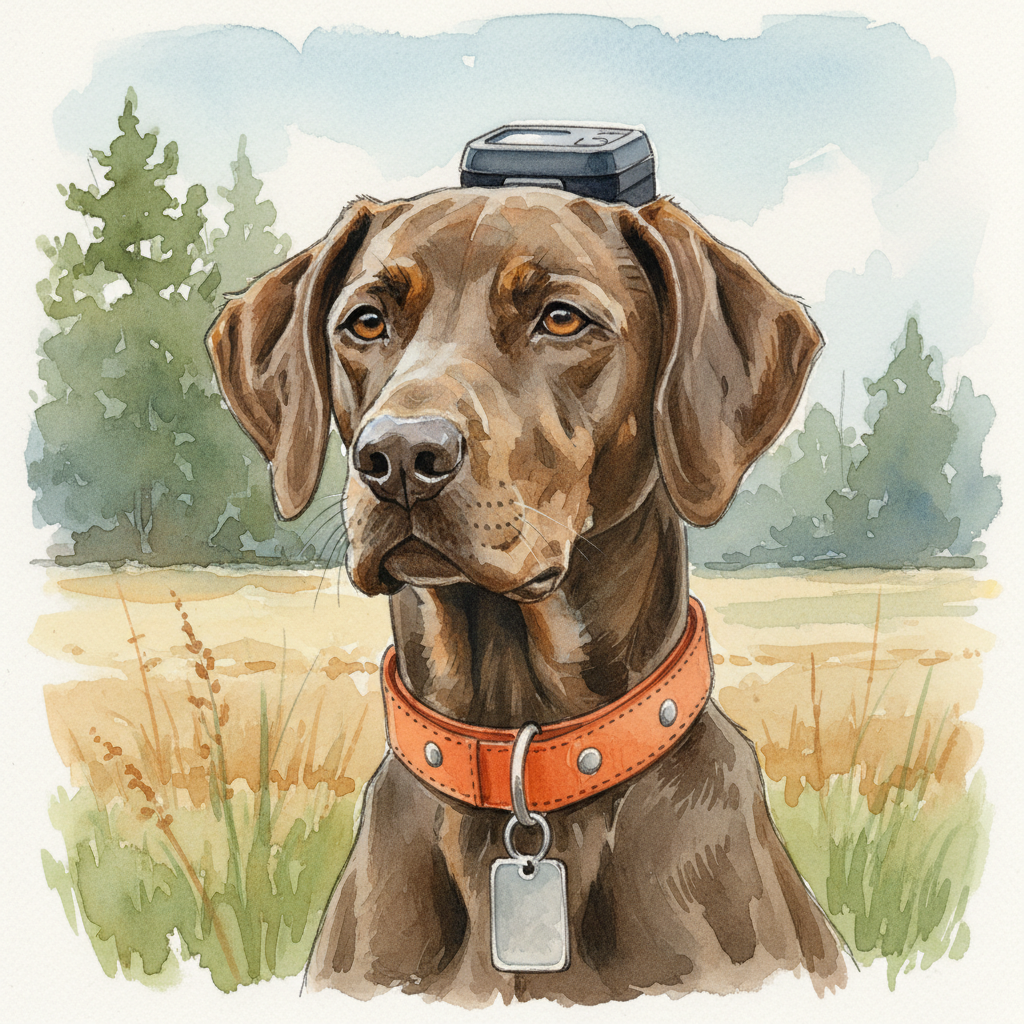
- ID Tags: Your dog should always wear a collar with current ID tags. These tags should include your phone number and address. Think about adding a “Reward if Found” tag with your hunting license number.
- GPS Collar: A GPS tracking collar can literally save your dog’s life. It lets you pinpoint their location if they wander off or get lost in dense cover. Always test the device’s battery and range before every hunting trip.
Gear Up for Protection
Help protect your dog from tough weather and potential injuries.
- Hunter Orange: Your dog should wear a hunter orange vest or bandana. This makes them much easier for you and other hunters to see, especially in thick brush or when the light starts to fade.
- Paw Protection: Consider dog boots to shield their paws from rough ground, thorns, ice, or scorching surfaces. Get your dog used to wearing them long before the actual hunt.
- Protective Vests: Some hunters use cut-resistant vests. These can protect dogs from sharp objects or animal attacks, like when hunting boar.
Pack a Dog First Aid Kit
Be ready for those minor injuries that can pop up in the field.
- The Essentials: Your kit should have bandages, antiseptic wipes, sterile saline solution, tweezers, scissors, an emergency muzzle, and any medications your dog needs regularly.
- Learn Basic First Aid: Know how to handle common hunting injuries like cuts, paw pad injuries, insect stings, and heat exhaustion. Think about taking a pet first aid course.
Keep Them Hydrated and Fed
Just like you, your dog needs plenty of water and fuel to keep going.
- Water Breaks: Always bring lots of fresh water and offer it often, especially on warm days or when your dog’s working hard. Don’t let your dog drink from stagnant ponds or streams; they can carry parasites.
- Snacks: Small, high-energy snacks can help your dog maintain their stamina all day long.
Watch Out for Environmental Dangers
Keep your eyes peeled for anything that could harm your pup.
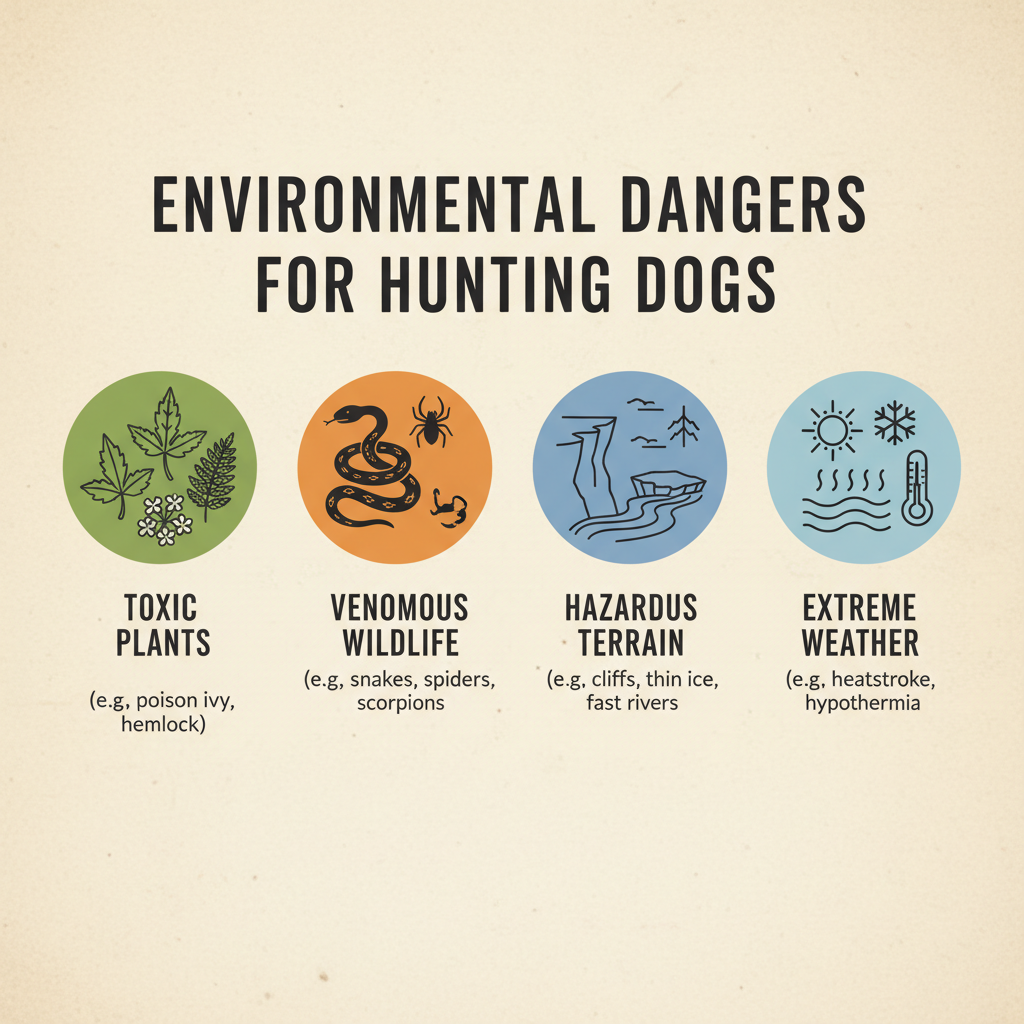
- Dangerous Plants and Critters: Know which plants are toxic in your hunting area and teach your dog to “leave it.” Be aware of venomous snakes, spiders, and any other dangerous wildlife.
- Tricky Terrain: Watch out for steep drops, unstable ground, and bodies of water. Never let your dog chase game into risky areas.
- Weather Conditions: Pay close attention to the forecast. Dogs can get hypothermia in cold, wet conditions or suffer from heatstroke in hot, humid weather. Adjust your hunting plans as needed.
Give Your Dog Breaks
Even the most energetic dog needs to rest.
- Scheduled Rests: Plan regular breaks. Your dog needs time to rest, rehydrate, and either cool down or warm up.
- Signs of Overdoing It: Look for signs of tiredness, like excessive panting, falling behind, or limping. If your dog shows these signs, it’s time to stop and let them rest.
Be Aware of Other Hunters
Gun safety is incredibly important, especially with other people around.
- Visibility: Make sure you and other hunters can always see your dog. That hunter orange is crucial here.
- Control: Keep your dog close and under your control, especially when other hunters are nearby. Never let them run into another hunter’s line of fire.
- Gunshot Training: If your dog isn’t used to loud gunshots, gradually introduce them to the sound before hunting season. Start with distant, quiet shots and slowly bring the sound closer and louder over time.
A Thorough Check-Up for Hunting Dog Safety
Always give your dog a careful once-over after every hunt.
- Paw Pads: Check for any cuts, thorns, cracked pads, or swelling.
- Ears and Eyes: Look for debris, ticks, or irritation.
- Coat and Skin: Scan for ticks, burrs, scratches, or any unusual bumps.
- Body: Gently feel their legs and body for any signs of injury, soreness, or swelling.
Rest and Recovery
Let your dog unwind and recuperate.
- Warmth and Comfort: Give them a warm, dry, and cozy spot to rest.
- Nutrition: Offer a nourishing meal and fresh water.
- Monitor: Keep a close eye on your dog for the next 24-48 hours. Watch for any delayed signs of injury or illness. If you notice anything concerning, reach out to your vet right away.
Hunting with your dog creates unforgettable memories and strengthens your bond. By following these hunting dog safety tips, you’re making sure both you and your loyal companion can enjoy many safe and successful seasons out in nature.