
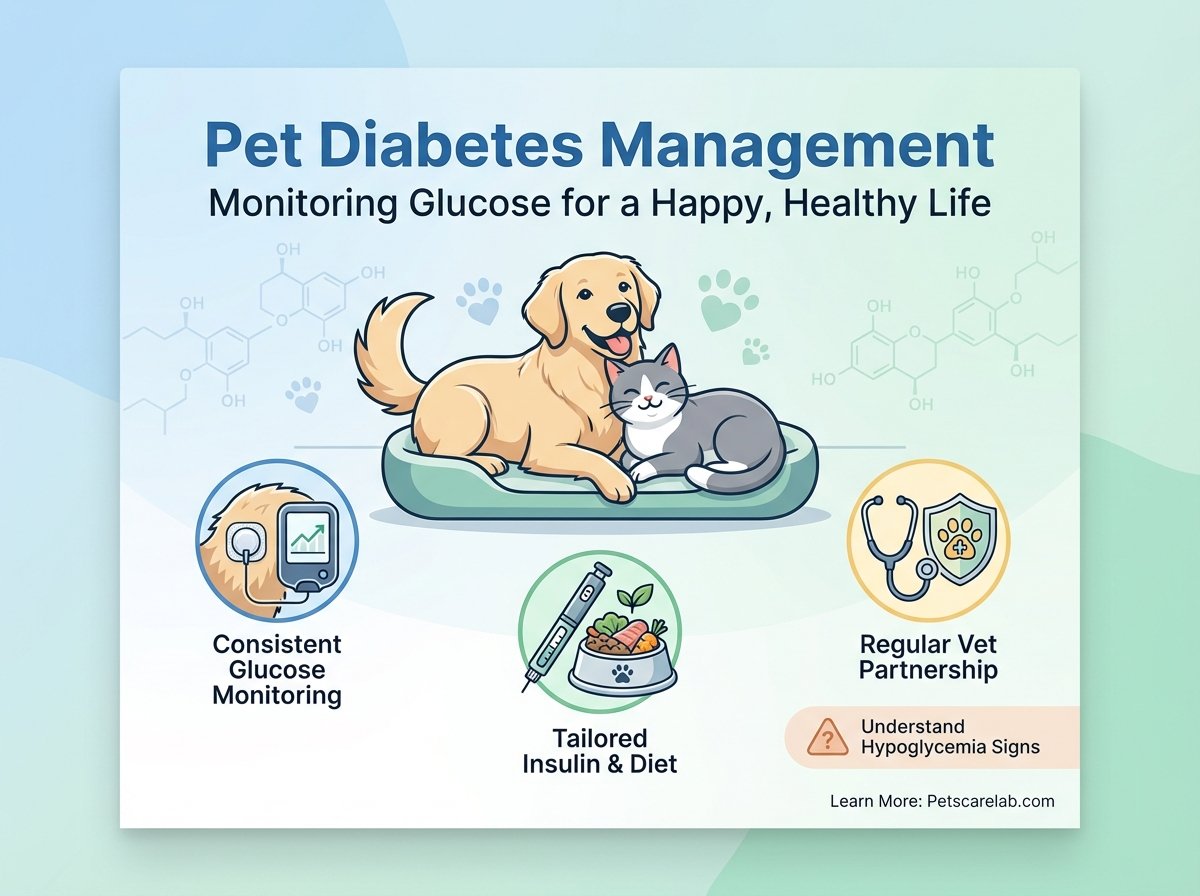
Finding out your beloved dog or cat has diabetes can feel overwhelming, but with the right pet diabetes management plan, your companion can still live a happy, full life. The key is carefully watching and managing their blood sugar levels. Regular check-ups help ensure their treatment is working, allow for quick adjustments, and steer clear of serious issues like dangerously low blood sugar (hypoglycemia) or life-threateningly high blood sugar (diabetic ketoacidosis).
What Exactly is Pet Diabetes?
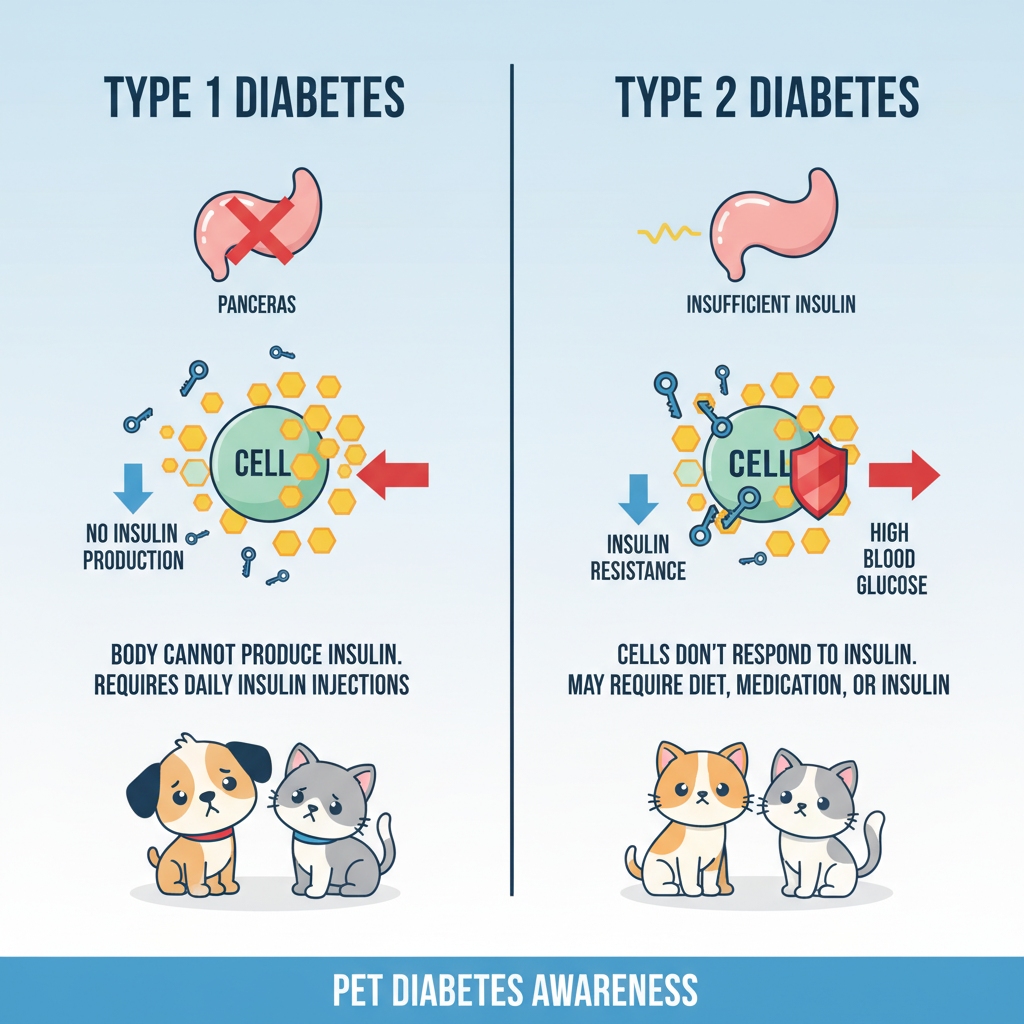
Diabetes mellitus is a condition where your pet’s body can’t make or properly use insulin. Insulin is a hormone that acts like a key, moving sugar (glucose) from their bloodstream into their cells for energy. Without it, sugar builds up in their blood, leading to health problems.
Pets usually get one of two main types of diabetes:
- Type 1 Diabetes (Insulin-Dependent): This is most common in dogs. It happens when their pancreas stops making enough insulin because the cells that produce it have been destroyed. Pups with Type 1 diabetes need insulin shots every single day.
- Type 2 Diabetes (Non-Insulin-Dependent): More often seen in cats, Type 2 diabetes means their body either doesn’t make enough insulin or their cells ignore its signals (insulin resistance). Some cats with Type 2 might start out managing with diet and pills, but many eventually need insulin shots too.
Why Keeping an Eye on Glucose is So Important
Monitoring your pet’s blood glucose isn’t just a suggestion; it’s a lifeline for several reasons:
- Does the Treatment Work? It tells our veterinary specialists if the insulin dose and overall plan are actually keeping your pet’s blood sugar in check.
- Catching Problems Early: Regular checks can spot dangerously high or low blood sugar before they become full-blown emergencies, helping you step in to prevent hypoglycemia or diabetic ketoacidosis.
- Tailored Care: Every pet is unique. They react differently to insulin and food. Monitoring helps us fine-tune their treatment plan to exactly what they need.
- Spotting Other Issues: Odd swings in glucose levels can sometimes be a red flag for other underlying health problems or signal that your pet is becoming resistant to insulin.
How We Monitor Your Pet’s Glucose Levels
There are a few ways to keep tabs on your pet’s glucose, each with its own pros and cons. Our team at Petscarelab will help you figure out the best approach for your furry friend.
1. Blood Glucose Curves
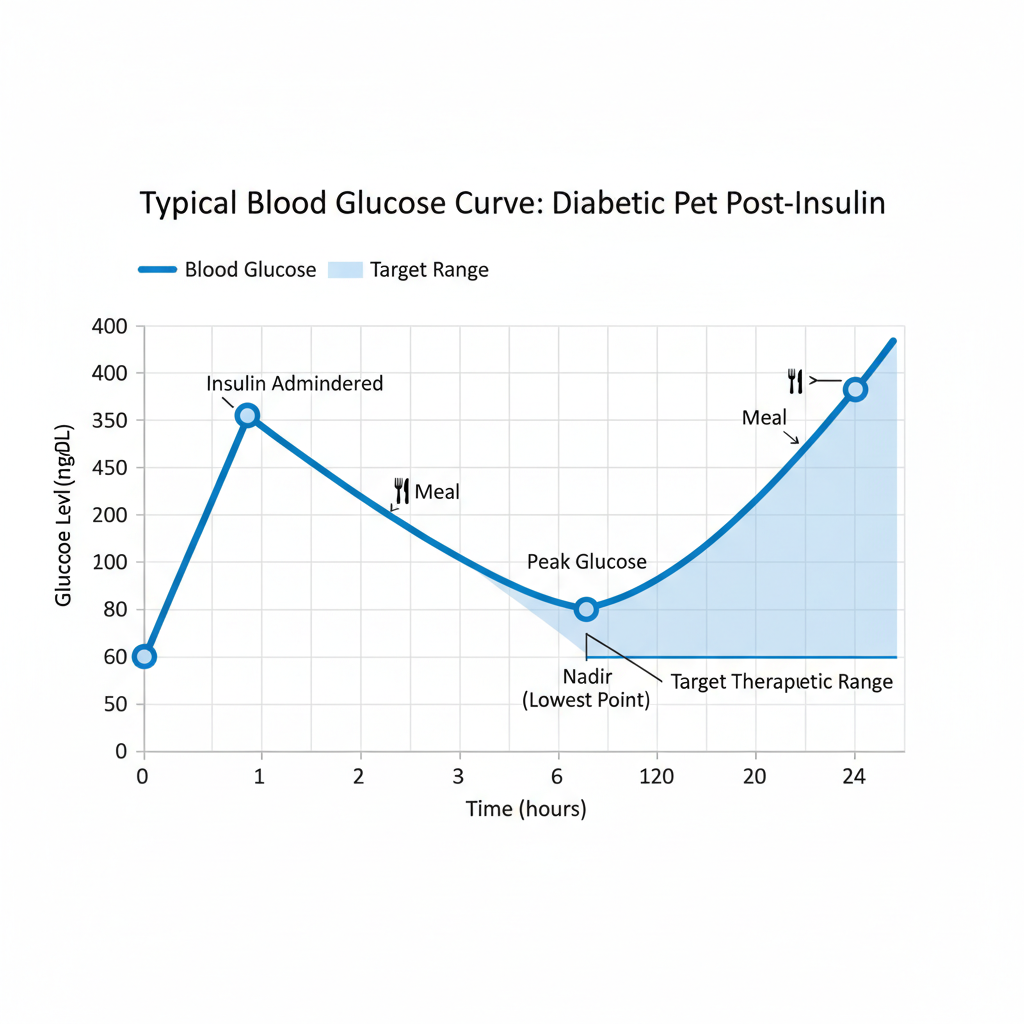
Think of a blood glucose curve as a day-long diary of your pet’s sugar levels. We take several blood samples over 12 to 24 hours, usually every 1-2 hours, to see how their blood sugar changes throughout the day after insulin, food, and playtime.
How we do it:
- At the Clinic: For a long time, these curves meant a day at the vet. Your pet would hang out with us, and our technicians would draw blood samples at set times.
- At Home: Many pet parents are now learning to do these curves themselves at home with a small, handheld glucometer. This can often give a clearer picture because pets are much more relaxed in their own environment.
What it tells us:
- Insulin’s Power: How well the insulin is doing its job and how long its effects last.
- Highs and Lows: It shows us the highest and lowest glucose levels. That “nadir” (lowest point) is super important – we want to make sure it doesn’t drop too far, which could cause hypoglycemia.
- Insulin’s Lifespan: How long the insulin remains effective in their system.
- Dosage Tweaks: It’s our best tool for deciding if we need to adjust their insulin dose up or down.
The Tricky Bits:
- Stress Can Skew It: Being away from home at the vet clinic can stress some pets, which can actually raise their blood sugar and make the results less accurate.
- Time Commitment: It takes a good chunk of time out of your day.
- “Ouchy” Paws: It means multiple blood draws, which isn’t always fun for your pet.
2. Spot Checks
Spot checks are quick peeks at your pet’s blood glucose at specific moments. Maybe it’s before or after their insulin shot, or when you notice signs of high or low blood sugar. They’re great for a fast assessment but won’t show you the full daily rollercoaster of glucose levels.
How we do it:
- You’ll use a portable glucometer (many human ones work fine for pets).
- We’ll show you how to get a tiny blood sample, usually from an ear vein, lip, or paw pad.
What it tells us:
- Their exact glucose level at that very moment.
- It can help confirm if you suspect hypoglycemia or hyperglycemia.
The Tricky Bits:
- It’s just a snapshot, not a trend over time.
- You’ll need some training to get the technique right.
3. Continuous Glucose Monitoring (CGM)
This is a newer, increasingly popular way to monitor glucose in pets. It involves placing a tiny sensor under your pet’s skin, typically on their back or side. This sensor constantly measures glucose levels in the fluid around their cells (interstitial fluid) for up to 14 days.
How we do it:
- Our veterinary team will apply the sensor.
- You’ll use a special reader or smartphone app to scan the sensor wirelessly and get real-time glucose readings.
What it tells us:
- Real-Time Info: You get a constant stream of glucose readings, day and night.
- Hidden Patterns: It helps us see trends and fluctuations that we might miss with occasional blood checks.
- Silent Lows: It can even catch “silent” hypoglycemic episodes that you might not notice, which are especially dangerous.
- Stress-Free: Your pet doesn’t have to endure repeated blood draws, making it much less stressful.
The Tricky Bits:
- Cost: The sensors can be a bit pricey.
- Accuracy: They’re generally very accurate, but there can be a slight delay between what the interstitial fluid shows and actual blood glucose. External factors can sometimes affect readings too.
- Keeping it On: Some pets might try to chew or scratch at the sensor, so they might need a protective covering.
4. Fructosamine Testing
Fructosamine is a protein that forms when glucose in the blood attaches to other proteins. The level of fructosamine gives us an average of your pet’s blood glucose over the past 1-3 weeks.
How we do it:
- We take a single blood sample and send it off to a lab.
What it tells us:
- Long-Term Control: It gives us a broad overview of how well glucose has been controlled over weeks, not just a momentary reading.
- No Stress Effect: Unlike blood glucose curves, it’s not affected by short-term stress that can temporarily raise blood sugar.
The Tricky Bits:
- Doesn’t Spot Lows: It can’t tell us if your pet is having dangerously low blood sugar episodes.
- No Quick Changes: It won’t show us day-to-day ups and downs or how fast your pet reacts to insulin adjustments.
How We Manage Your Pet’s Glucose Levels
Effective pet diabetes management is a team effort involving several key strategies:
1. Insulin Therapy
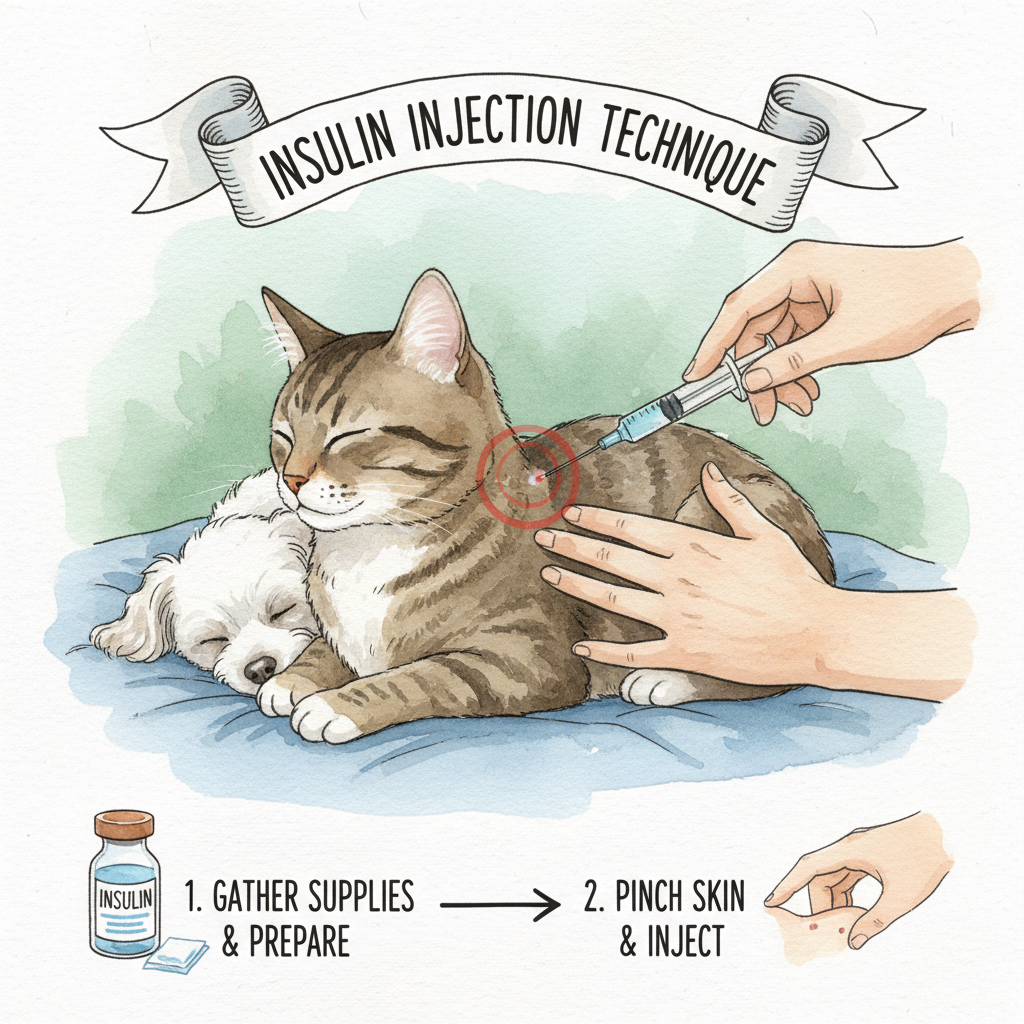
- Dose is Key: Your pet will typically get insulin injections once or twice a day. Our veterinary specialists carefully figure out the right dose based on your pet’s weight, glucose levels, and how they respond to treatment.
- Proper Shots: Learning the right injection technique is vital. Our vet or a trained technician will show you how to measure and give the shot safely.
- Insulin Types: There are different types of insulin, each working for a different length of time. We’ll choose the best one for your pet, such as Vetsulin or Prozinc.
2. Diet and Nutrition
- Stick to a Schedule: Feeding your pet at the same time every day, usually right before or with their insulin shot, is super important for keeping their glucose levels steady.
- The Right Food:
- For Dogs: We often recommend diets that are high in complex carbohydrates and fiber, with moderate fat. This helps their body absorb glucose slowly.
- For Cats: High-protein, low-carbohydrate diets are usually best for diabetic kitties, as this matches what they’d naturally eat.
- Healthy Weight: Keeping your pet at an ideal weight is crucial. Extra pounds can make insulin less effective.
3. Exercise
- Steady Routine: Consistent exercise helps your pet’s body use insulin better and process glucose more efficiently.
- Avoid Sudden Changes: Big, sudden changes in how much your pet exercises can mess with their glucose and insulin needs. Always chat with our team if you’re planning major changes to their activity level.
4. Regular Vet Check-ups
- Monitoring & Tweaks: Regular visits allow our veterinary specialists to review all your pet’s glucose data, do physical exams, and adjust their treatment plan as needed.
- Catching Complications: These check-ups help us spot and deal with common issues like cataracts (often seen in diabetic dogs), urinary tract infections, or pancreatitis.
Knowing the Signs of Low Blood Sugar (Hypoglycemia)
Hypoglycemia, or dangerously low blood sugar, is a serious and potentially life-threatening complication of insulin treatment. It can happen if your pet gets too much insulin, misses a meal, or gets way too much exercise.
Watch for these signs of hypoglycemia:
- Weakness, seeming tired or sluggish
- Looking confused or disoriented
- Stumbling, acting wobbly
- Muscle twitching or tremors
- Seizures
- Passing out
What to do if you think your pet has hypoglycemia:
- Offer Sugar: Immediately give your pet a small amount of their regular food or rub something sugary, like Karo syrup, honey, or maple syrup, on their gums.
- Keep Watching: Stay close and observe them. If they improve within 10-15 minutes, keep monitoring them and then call our team.
- Emergency Care: If your pet has a seizure, loses consciousness, or doesn’t get better after you give them sugar, rush them to an emergency vet right away.
Managing diabetes in your dog or cat takes dedication, a keen eye, and working hand-in-hand with our veterinary team. By understanding the different monitoring options, sticking to their treatment plan, and knowing how to act fast in emergencies, you can help your diabetic companion enjoy a long, healthy, and happy life. Open communication with our team is the secret to successfully navigating the ups and downs of pet diabetes management.