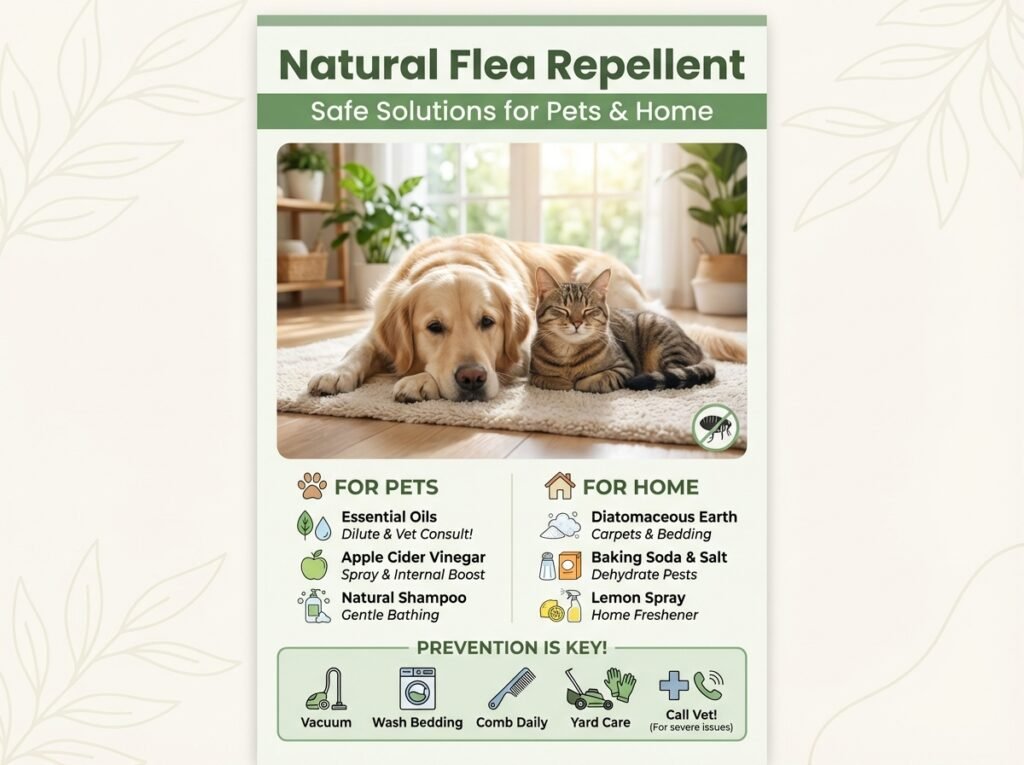
Natural Flea Repellent for Your Pets and Home
Those tiny, jumping parasites – fleas – can turn your pet’s life into an itchy nightmare. Beyond constant scratching, a bad infestation can lead to painful skin allergies and even anemia, especially for little ones. The good news? You can protect your beloved companions and home using effective natural flea repellent methods, steering clear of harsh chemicals. Our team at Petscarelab believes in keeping your furry family safe and comfortable, and that starts with understanding how to naturally combat these unwelcome guests.
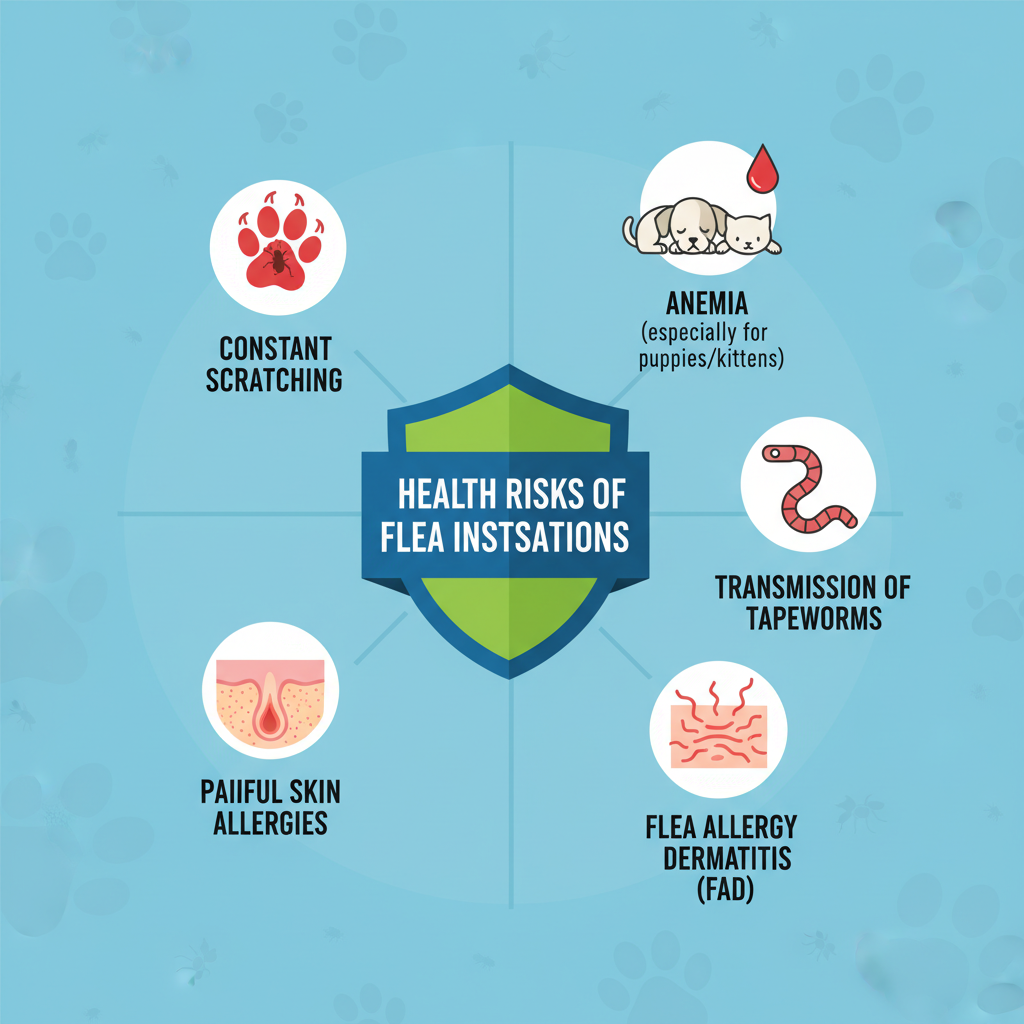
Fleas aren’t just annoying; they carry real health risks, from transmitting tapeworms to causing painful bites and skin problems. Opting for natural flea control helps you keep these pests away, ensuring everyone in your home, pets and people alike, can live comfortably and scratch-free.
Natural Flea Repellents for Your Pet
When it comes to keeping fleas off your dog or cat, a natural approach means using ingredients that are gentle on them but tough on fleas. Our team has gathered some of the best ways to protect your furry friend.
Essential Oils as a Natural Flea Repellent
Some essential oils are superstars at driving away insects. When you dilute them correctly, they can be a safe and powerful addition to your natural flea repellent arsenal.
- Cedarwood oil: This oil is a powerful deterrent against fleas, mosquitoes, and even ticks.
- Lavender oil: Not only does it help keep fleas away, but its calming scent can also soothe your pet’s irritated skin.
- Lemongrass oil: Fleas can’t stand this oil’s fresh, citrusy smell, making it a fantastic natural bug blocker.
- Peppermint oil: Its intense aroma is a huge turn-off for fleas.
- Rosemary oil: Another aromatic herb with strong insect-fighting powers.
How to use essential oils:
- Dilute, dilute, dilute: You absolutely must mix essential oils with a carrier oil (like coconut or olive oil) before putting them on your pet’s skin. This prevents irritation. A good rule of thumb is 1-2 drops of essential oil for every tablespoon of carrier oil.
- Where to apply: Gently dab a few drops of the diluted mix onto your pet’s collar, or rub a tiny bit into their fur. Focus on spots fleas love, like the back of their neck and the base of their tail.
- How often: Reapply every few days, or whenever your pet gets a bath.
Crucial safety tip: Always talk to your vet before using essential oils on your pets, especially cats! Some oils can be toxic to cats even in small doses. Keep a close eye on your pet for any signs of irritation or discomfort after application.
Apple Cider Vinegar as a Natural Flea Repellent
Apple cider vinegar (ACV) works by subtly changing your pet’s pH balance, making their blood taste far less appealing to fleas. It’s like an internal “keep out” sign!
How to use apple cider vinegar:
- Spray it on: Mix equal parts ACV and water in a spray bottle.
- Gentle mist: Lightly mist your pet’s coat, being super careful to keep it away from their eyes and any open cuts.
- Daily defense: Use this spray daily during prime flea season or before any outdoor adventures. You can also add a tiny splash to their drinking water (about 1 teaspoon for every 50 pounds of body weight) to give them extra protection from the inside out.
Natural Flea Shampoo
When bath time rolls around, reach for a natural flea shampoo. These formulas harness the power of ingredients like:
- Pyrethrin: This is a natural insecticide derived from chrysanthemum flowers, offering a safer alternative to harsh synthetic chemicals.
- Geraniol: Found in geraniums, this ingredient is fantastic at sending fleas packing.
- Citronella: You’ve probably heard of this one! It comes from lemongrass and is a widely known natural flea repellent.
How to give a natural flea bath:
- Lather up: Work the shampoo into a rich lather all over your pet, really focusing on the neck, tail, and between their legs – those sneaky flea hideouts.
- Let it soak: Leave the shampoo on for 5-10 minutes. This gives the natural ingredients time to do their job.
- Rinse clean: Rinse your pet thoroughly until all suds are gone.
- Comb them out: Right after the bath, grab your flea comb. This is your chance to physically remove any stunned or lingering fleas and eggs.
Natural Flea Repellents for Your Home
Treating your pet is only half the battle; keeping your home flea-free is just as vital. Luckily, you can use several natural methods to make your living space a place fleas simply want to avoid.
Diatomaceous Earth (DE) as a Natural Flea Repellent
Food-grade diatomaceous earth is a miraculous natural powder, made from the fossilized remains of tiny aquatic algae. It works like microscopic razor blades, scratching the waxy coating off fleas and their larvae, causing them to dehydrate and die.
How to use diatomaceous earth:
- Sprinkle power: Lightly dust food-grade DE over your carpets, rugs, pet bedding, and furniture.
- Let it work: Let it sit for 24-48 hours. This gives it plenty of time to work its magic.
- Vacuum it up: Vacuum the treated areas thoroughly to pick up the DE and all those dead fleas.
- Repeat if needed: If you’re battling a serious infestation, don’t hesitate to repeat this process a few times.
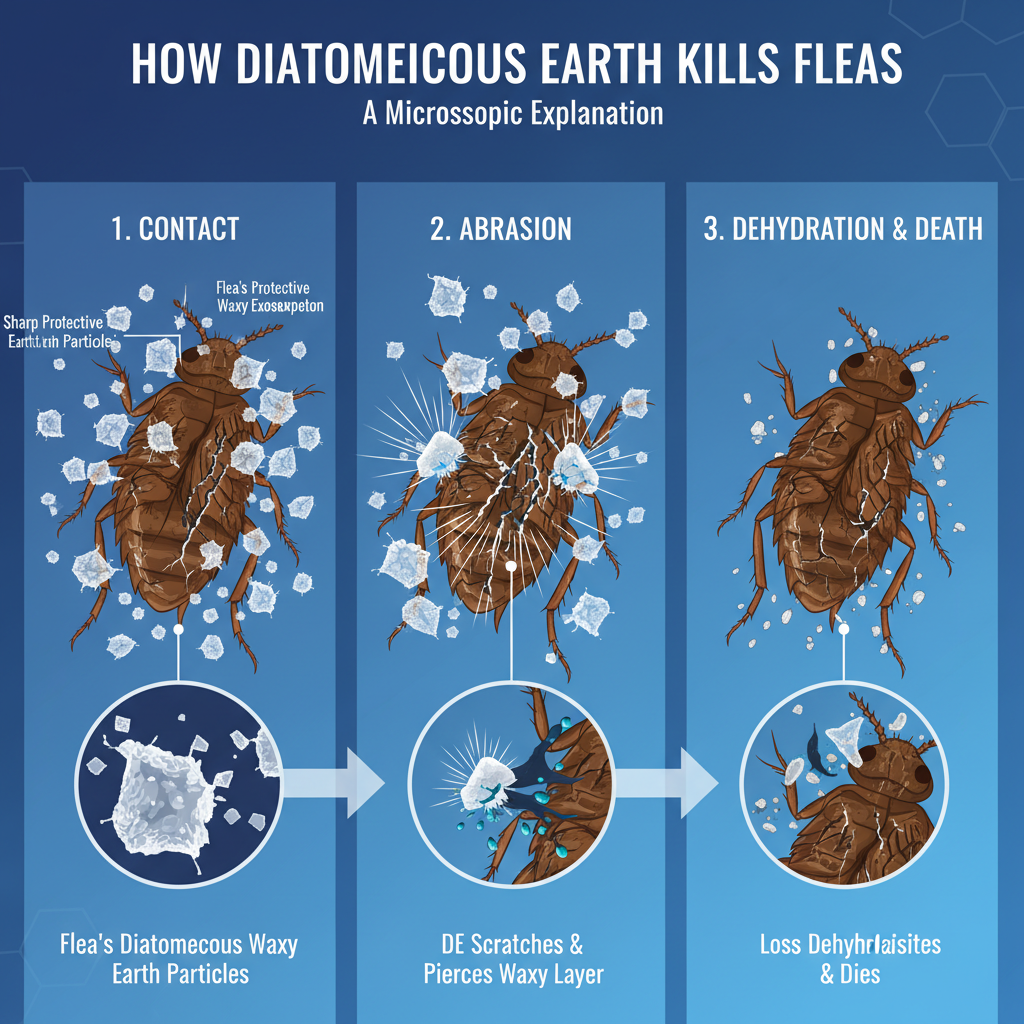
Important safety note: Food-grade DE is safe for your pets, but you should avoid breathing in the dust yourself, as it can irritate your lungs. Wear a mask when you’re applying it.
Baking Soda for Natural Flea Control
Baking soda is another simple yet effective ingredient that helps dry out fleas and their eggs hiding in your carpets and upholstery.
How to use baking soda:
- Sprinkle generously: Dust baking soda all over your carpets, rugs, and upholstered furniture.
- Brush it in: Grab a stiff brush and work the baking soda deep into the fibers.
- Wait it out: Let it sit for several hours, or even better, overnight.
- Vacuum thoroughly: Vacuum all treated areas meticulously. Crucially, immediately empty your vacuum cleaner contents into a sealed bag and toss it into an outdoor trash can. You don’t want those fleas escaping!
Salt as a Natural Flea Repellent
Just like baking soda and diatomaceous earth, regular table salt can be a secret weapon against fleas. Finely ground salt acts as a potent dehydrator, literally drying out fleas and their eggs.
How to use salt:
- Sprinkle away: Grab some finely ground salt (like the stuff you use for cooking) and sprinkle it generously over your carpets and upholstery.
- Let it sit: Give it 1-2 days to work its drying magic.
- Vacuum everything: Vacuum thoroughly to suck up the salt and all the flea casualties.
- Repeat often: Keep this routine going every few days for a week or two. This helps catch any newly hatched fleas from eggs that survived the first round.
Lemon Spray: A Zesty Natural Flea Repellent
Lemons aren’t just for lemonade! The d-limonene found in lemons is a fantastic natural flea killer and repellent, giving your home a fresh, citrusy defense.
How to make and use your lemon spray:
- Brew a batch: Thinly slice a lemon and add it to a pint of water. Bring it to a boil, then let it steep overnight. This extracts all those powerful compounds.
- Strain and bottle: Strain the liquid into a spray bottle.
- Mist your home: Lightly mist pet bedding, carpets, and other spots where fleas love to hang out. Remember, avoid spraying this directly on your pet, as the acidity can irritate their delicate skin.
- As needed: Use this spray as often as you need. Always test a tiny, hidden spot first to make sure it won’t stain your fabrics.
Herbal Flea Repellent for Your Home
Nature provides us with a host of aromatic herbs that fleas absolutely despise! You can use these to create fragrant sachets or sprays for a delightful, chemical-free defense in your home.
Flea-fighting herbs:
- Pennyroyal: This herb is super effective, but a HUGE warning: it’s toxic if your pets eat it. Use it with extreme caution in areas your pets can’t reach, or skip it entirely to be safe.
- Rue: A less common but powerful herb with insect-repelling talents.
- Wormwood: Known for its strong scent that sends fleas running.
- Fennel: Perfect for infusing sachets with its repellent properties.
- Rosemary: A versatile herb that works wonders as a natural flea repellent for both your pets and your home.
How to use herbal repellents:
- Sachets: Fill small cloth bags with dried herbs and tuck them into pet bedding, under couch cushions, or in closets.
- Homemade sprays: Brew a strong “tea” from your chosen herbs, let it cool completely, then use it as a refreshing spray for carpets and furniture.
- Garden barrier: Plant these herbs around the outside of your home to create a living, breathing barrier against fleas.
More Natural Flea Prevention Tips
Beyond using direct natural flea repellent products, a truly effective flea prevention plan involves regular home maintenance and smart hygiene. Think of it as creating a multi-layered defense!
Vacuum, Vacuum, Vacuum
Seriously, regular vacuuming is your MVP for physically sucking up fleas, their eggs, larvae, and pupae from every nook and cranny in your home.
Tips for super effective vacuuming:
- Daily attack: During flea season, make it a daily habit to vacuum carpets, rugs, upholstery, and even the tiny cracks in your floors.
- Immediate disposal: This is crucial! As soon as you finish vacuuming, immediately empty the vacuum bag or canister into a sealed plastic bag and rush it to an outdoor trash can. You don’t want those little jumpers escaping back into your house.
- Target their hangouts: Pay extra attention to your pet’s favorite spots – their bed, that cozy corner of the couch, under their food bowl – anywhere they love to chill.
Washing Pet Bedding
Your pet’s bed is like a five-star resort for fleas and their eggs – a prime breeding ground! Regular washing is non-negotiable.
Washing tips:
- Weekly hot wash: Toss all pet bedding, blankets, and plush toys into the washing machine at least once a week. Use the hottest water setting possible.
- High heat dry: After washing, dry everything on the highest heat setting your fabrics can handle. That heat is what truly kills any lingering fleas or eggs.
- Don’t forget yours: If your pet snuggles up with you, remember to wash your own bedding, throws, and curtains regularly too!
Flea Combing
Your flea comb isn’t just a brush; it’s a critical tool for physically removing fleas right off your pet. It’s a hands-on way to patrol for invaders!
Tips for effective combing:
- Daily patrol: Make daily combing a routine, especially after your pet has been romping around outside.
- Target their hotspots: Pay extra attention to the neck, the base of the tail, and the groin area – these are flea favorites.
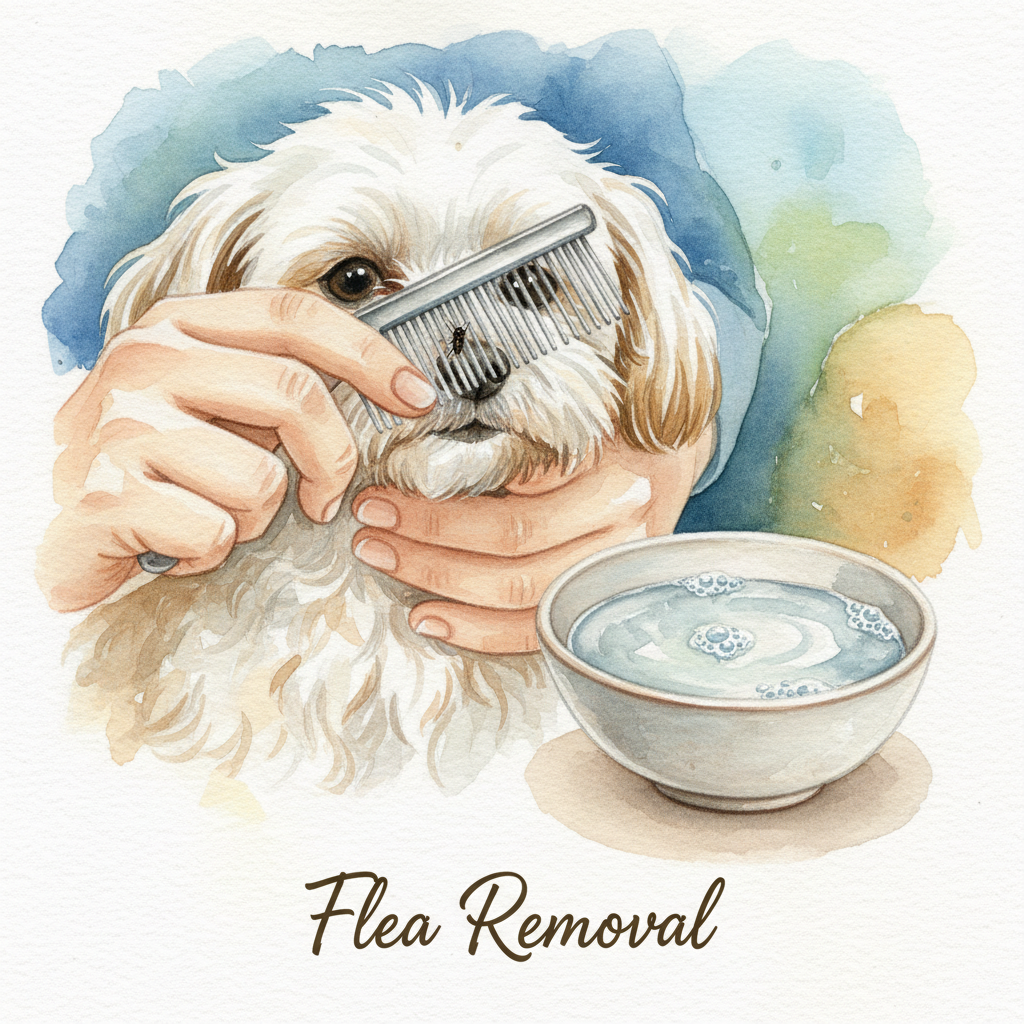
- Soapy water trap: Keep a small bowl of soapy water right next to you. After each pass of the comb, dunk it in. The soap breaks the water’s surface tension, trapping and drowning any fleas you’ve caught.
Maintaining Your Yard
Don’t forget about your outdoor space! Your yard can easily become a flea playground, so keeping it tidy is absolutely essential for a truly effective natural flea repellent strategy.
Yard maintenance tips:
- Mow it short: Fleas love tall grass and shady spots. Keep your lawn mowed short and trim back overgrown bushes to eliminate their hiding places.
- Clear the clutter: Get rid of leaf litter, brush, and any other organic debris. These are perfect breeding grounds for fleas.
- Cedar chips: Sprinkle cedar chips in areas where your pets love to hang out. Cedar acts as a natural deterrent to fleas.
- Beneficial nematodes: Consider introducing beneficial nematodes to your lawn. These microscopic roundworms are natural predators of flea larvae, adding another layer of defense.
When to Call Your Vet
While these natural remedies are fantastic for prevention and tackling mild flea problems, sometimes you need professional help. Knowing when to reach out to your vet is key for your pet’s health.
It’s time to call your vet if:
- Severe infestation: Your pet is scratching relentlessly, losing patches of hair, covered in scabs, or showing signs of anemia (like pale gums and lethargy). These are serious signs.
- Allergic reactions: For pets with flea allergies, even a few bites can trigger intense itching and painful skin issues that absolutely need medical attention.
- Ongoing struggle: If you’ve been consistently trying natural methods for a few weeks and the fleas just won’t go away, it’s time for more targeted help.
- Internal parasites: Fleas can pass on tapeworms. If you spot tiny, rice-like segments around your pet’s rear end, they likely have tapeworms and will need deworming medication.

Your vet is your best ally. They can offer stronger, vet-approved flea treatments, diagnose any secondary skin infections, and address any health problems fleas might have caused. Plus, they can give you personalized advice on the safest and most effective natural methods for your unique pet.