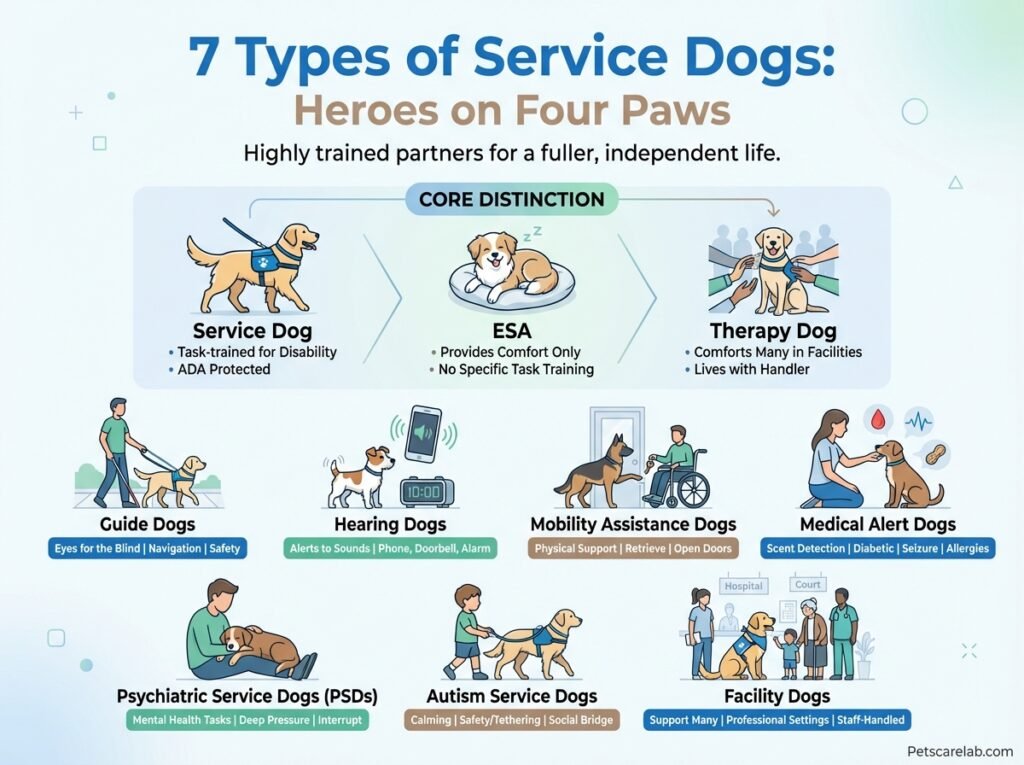
Ever wondered about the amazing jobs dogs can do to help people? We often hear about service dogs, emotional support animals, and therapy dogs, but they’re not all the same. Here at Petscarelab, we want to clear up any confusion. A service dog isn’t just a beloved pet; they’re highly trained partners dedicated to helping people with disabilities live fuller, more independent lives. From guiding the visually impaired to alerting to medical emergencies, there are many incredible types of service dogs, each with unique skills. Let’s explore the vital roles these canine heroes play.
What Makes a Dog a Service Dog?
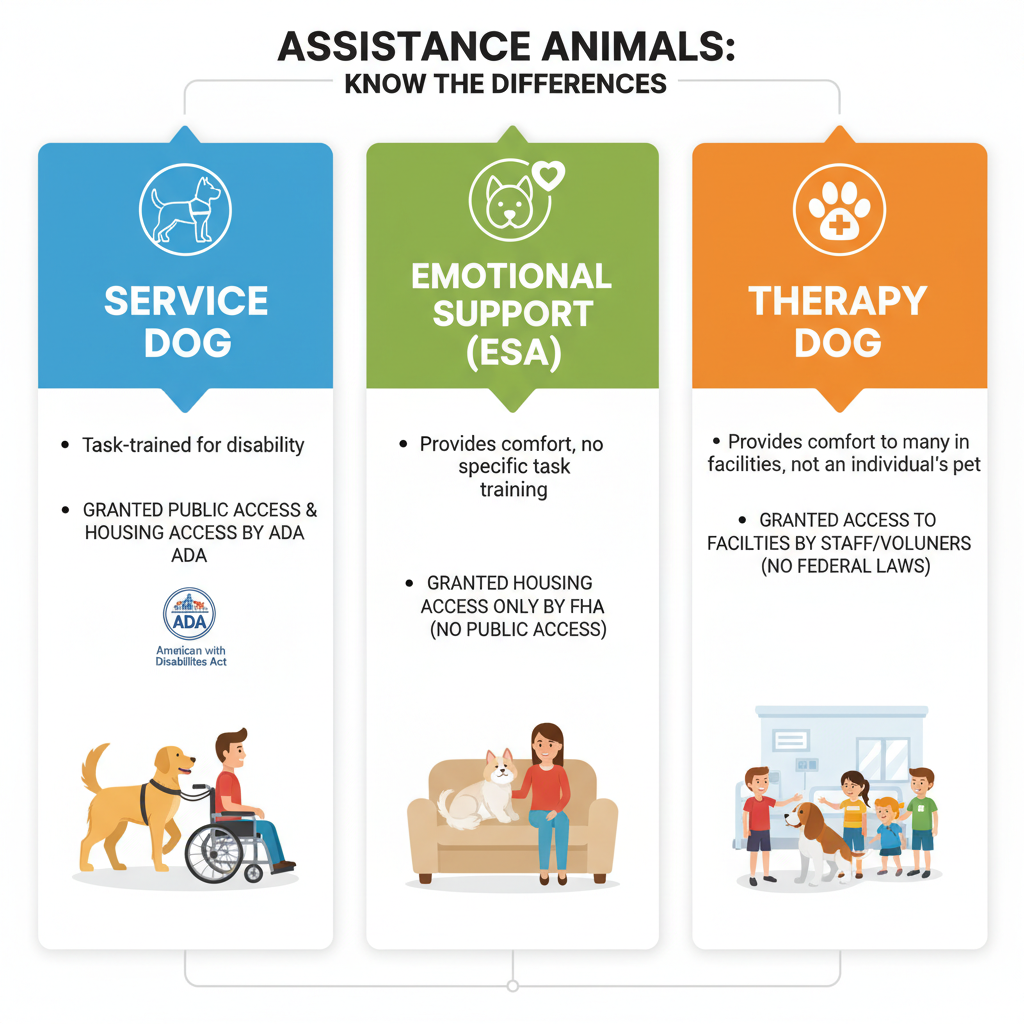
Our team at Petscarelab wants you to know that a service dog is a true working partner. According to the Americans With Disabilities Act (ADA), these are dogs specifically trained to perform tasks for someone with a disability. This isn’t just about comfort; the tasks they do must directly help their person manage their disability. Think of them as professionals on four paws – they’re not just pets. That’s why the ADA gives people with service dogs the right to bring their animals almost anywhere the public can go.
Now, it’s easy to confuse them with emotional support animals (ESAs) or therapy dogs, but there’s a big difference. ESAs offer wonderful comfort just by being there, but they don’t have specialized task training. Therapy dogs, on the other hand, are trained to bring joy and solace to many different people in places like hospitals or nursing homes, and they usually live with a facility handler, not with the people they visit. Service dogs, though, are all about dedicated, individual support.
1. Guide Dogs: Eyes on Four Paws
When you think of types of service dogs, guide dogs often come to mind first, and for good reason! These incredible pups are the eyes for people who are blind or have severe vision impairments. Imagine navigating a busy sidewalk, crossing a bustling street, or avoiding a sudden obstacle without seeing it – guide dogs make it possible. They wear a special harness, allowing their person to hold on and trust their every move.
What’s truly amazing is their “intelligent disobedience.” This means if their handler gives a command that would put them in danger – like stepping into traffic when a car is rushing by – the guide dog will refuse. They prioritize safety above all else, waiting until the path is truly clear. You’ll often see intelligent, calm breeds like Labrador Retrievers, Golden Retrievers, and German Shepherds working as guide dogs.
2. Hearing Dogs: Ears for Their People
Imagine not being able to hear a smoke alarm, a doorbell, or even your baby crying. That’s where hearing dogs step in! These smart types of service dogs are trained to be the ears for people who are deaf or have significant hearing loss. They learn to recognize crucial sounds – the buzzing of an alarm clock, the ring of a phone, a knock at the door, or the cries of a child.
When a hearing dog picks up on one of these important noises, they’ll gently nudge their person, then lead them straight to the source of the sound. This helps their handlers stay connected to their environment and respond quickly to things many of us take for granted. While any dog can learn this job, you’ll often see smaller, attentive breeds like Cocker Spaniels, Toy Poodles, and Chihuahuas excelling as hearing dogs.
3. Mobility Assistance Dogs: A Helping Paw for Movement
For people with physical disabilities who use wheelchairs, walkers, or need a little extra help with balance, mobility assistance dogs are incredible partners. These strong, steady types of service dogs are trained to help with all sorts of daily tasks that might otherwise be a challenge. They can:
- Pick up a dropped phone or keys – no more struggling to bend down!
- Open and close doors, making navigation much simpler.
- Flip light switches on or off.
- Brace their handler, offering a solid support to help them stay steady or even stand up.
- Gently pull a wheelchair.
- Help their person move from a bed to a chair, or vice versa.
These amazing dogs give their handlers so much more freedom and confidence, making everyday life smoother and safer. Because these tasks require a bit of muscle, you often see sturdy, larger breeds like Labrador Retrievers, Golden Retrievers, German Shepherds, and Bernese Mountain Dogs in this role.
4. Medical Alert Dogs: Lifesaving Scent-Detectives
Some types of service dogs are true lifesavers, trained to sniff out subtle changes in their person’s body chemistry or recognize the early signs of a medical crisis. They can warn their handler about an impending issue, giving them precious time to get safe or take medication. Here are some incredible examples:
- Diabetic Alert Dogs: These clever pups can smell shifts in blood sugar levels – whether they’re too high or too low – and will nudge or paw their handler to let them know it’s time to check their glucose or take action.
- Seizure Alert/Response Dogs: Some dogs can sense an oncoming seizure, warning their person to lie down or move to a safe spot. Others are trained to stay by their handler’s side during a seizure, barking for help, or even bringing vital medication.
- Allergen Detection Dogs: For those with severe allergies, these dogs are trained to pinpoint the scent of dangerous allergens like peanuts or gluten in food or the environment, helping their handlers avoid life-threatening reactions.
- Cardiac Alert Dogs: These highly specialized dogs can detect changes in heart rate or blood pressure, alerting their handlers to potential cardiac events before they become critical.
These dogs offer a profound sense of security and can truly prevent emergencies, giving their owners a much greater sense of freedom. Labrador Retrievers, Golden Retrievers, Poodles, and even mixed breeds often excel in these vital roles.
5. Psychiatric Service Dogs (PSDs): More Than Just Comfort
Many people confuse Psychiatric Service Dogs (PSDs) with emotional support animals, but they’re very different. While an ESA offers comfort just by being a loving pet, PSDs are one of the types of service dogs specifically trained to perform concrete tasks that help someone manage a mental health disability. These jobs are tailored to help their person cope with conditions like PTSD, severe anxiety, depression, or bipolar disorder. Their tasks might include:
- Deep Pressure Stimulation (DPS): When anxiety or a panic attack hits, a PSD might lie across their handler’s lap or chest, using their weight to provide a calming, grounding pressure.
- Medication Reminders: A gentle nudge or paw at a specific time can remind their person it’s time for crucial medication.
- Interrupting Distressing Behaviors: If someone is engaging in repetitive or self-harming behaviors, a PSD can gently interrupt them, breaking the cycle.
- Finding Help or Guiding Home: During a disorienting episode, a PSD can lead their handler to a safe place or even guide them home.
- Room Checks: For those with paranoia or anxiety about being alone, a PSD can enter a room first to “clear” it, offering reassurance.
- Creating a Personal Space Barrier: In crowded places, a PSD can stand strategically to create a buffer, giving their handler a sense of personal space and reducing overwhelm.
These dogs are lifelines, giving their handlers a stronger sense of control and independence in their daily lives. Smart, calm breeds like Labrador Retrievers, Golden Retrievers, German Shepherds, and Poodles often make excellent PSDs, though any dog with the right temperament can be trained.
6. Autism Service Dogs: Companions for Connection and Safety
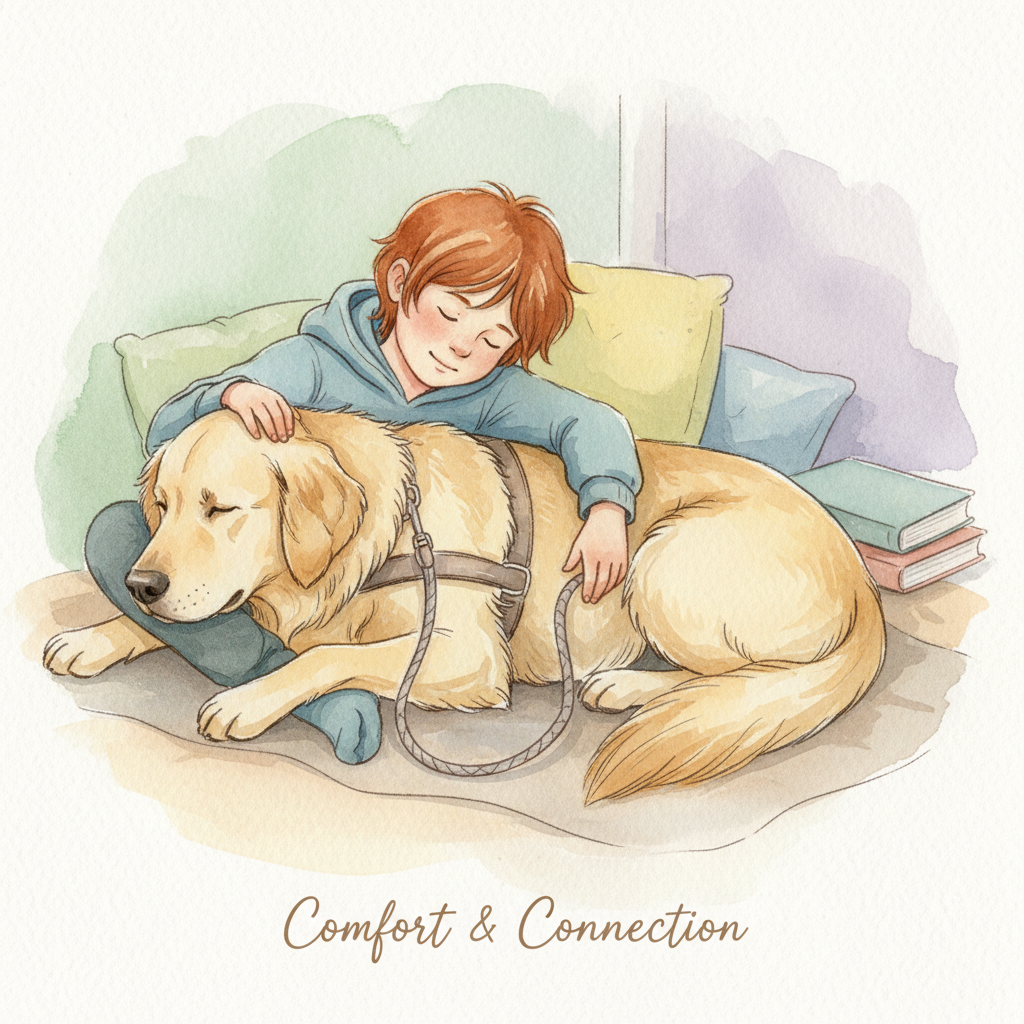
Autism service dogs are truly special, offering tailored support for individuals on the autism spectrum, often children. These incredible types of service dogs provide a stable, calming presence, help ease social interactions, and are invaluable in preventing wandering – a common safety concern. Their specific tasks might involve:
- Tethering: For children who tend to wander or bolt in public, the dog can be gently tethered to them, providing a strong, consistent anchor.
- Calming During Overload: Like PSDs, they can apply deep pressure stimulation, lying across a child’s lap or body to help soothe them during sensory overload or a meltdown.
- Interrupting Behaviors: A gentle nudge or distraction from their dog can help redirect a child from repetitive movements or self-stimulatory behaviors.
- Building Social Bridges: An autism service dog can act as a wonderful icebreaker, making it easier for children with autism to connect with others and fostering social interaction.
- Constant Reassurance: These dogs offer unconditional companionship, reducing anxiety and bringing a profound sense of security to their person and family.
These dedicated pups boost safety, communication, and social engagement, bringing immense comfort and improved daily life for both the individual with autism and their whole family. You’ll often find gentle, intelligent breeds like Labrador Retrievers, Golden Retrievers, and Standard Poodles doing this important work.
7. Facility Dogs: Bringing Comfort to Many
Unlike most types of service dogs who bond with one person, facility dogs are trained to bring their specialized skills to a wider group within professional environments. They’re different from therapy dogs because they undergo rigorous training for specific tasks within their workplace, always under the guidance of a professional staff member. Think of them as resident canine therapists or support staff.
Here are some places you might find these amazing dogs at work:
- Courtroom Facility Dogs: They sit quietly with children or vulnerable witnesses, offering a calming presence during stressful legal proceedings, helping them feel safe enough to share their stories.
- Hospital or Rehabilitation Facility Dogs: These pups can motivate patients during physical therapy, help distract from discomfort during medical procedures, or simply bring a smile to someone recovering.
- School or Crisis Intervention Facility Dogs: Working alongside counselors or social workers, these dogs offer a gentle, non-judgmental comfort to students or individuals dealing with trauma, stress, or grief.
These dogs are champions at creating a warmer, more supportive atmosphere, making tough situations a little easier for everyone involved. Their gentle demeanors and willingness to work make Labrador Retrievers and Golden Retrievers top choices for these important facility roles.
How Do You Get a Service Dog?
Bringing a service dog into your life is a big step, and it involves a thoughtful process. These dogs go through intense training and are carefully matched to ensure they’re the perfect partner for their human. Here’s a general idea of how it all works:
- Figure Out Your Needs: Start by talking with your healthcare provider to see if a service dog is the right fit for your disability. What specific tasks would you need a dog to do to help you day-to-day?
- Find a Great Organization: Do your homework and look for reputable service dog organizations. Many are accredited by Assistance Dogs International (ADI), which means they meet high standards for training and care. Our team at Petscarelab always recommends looking for ADI-accredited groups.
- Apply: Most organizations have an application process that involves detailed questions, medical records, and sometimes interviews. They want to get to know you, your lifestyle, and what kind of support you need.
- Be Patient – The Waiting List: Because of the immense demand and the deep level of training involved, there’s often a waiting list. This can stretch from a few months to a couple of years, but it’s worth it for the right match.
- Training and Matching Day: Once it’s your turn, you’ll be paired with a dog whose personality and skills perfectly complement yours. By this point, your future partner will have already aced all their basic and advanced task training.
- Team Training: This is where the real magic happens! You and your new dog will train together. You’ll learn how to handle them, give commands, understand their unique cues, and seamlessly weave them into your everyday life. This might happen at the organization’s facility or even in your own home.
- Certification and Ongoing Support: After you both successfully complete team training, you’ll typically get certification. Plus, many organizations offer continued support, making sure your partnership thrives for years to come.
- Training Your Own Service Dog: While it’s less common and definitely a bigger challenge, you can train your own service dog. Just remember, the dog still has to meet the ADA’s strict definition: they must be individually trained to do tasks directly related to your disability. If you go this route, we strongly recommend working with a professional trainer who specializes in service dog work.
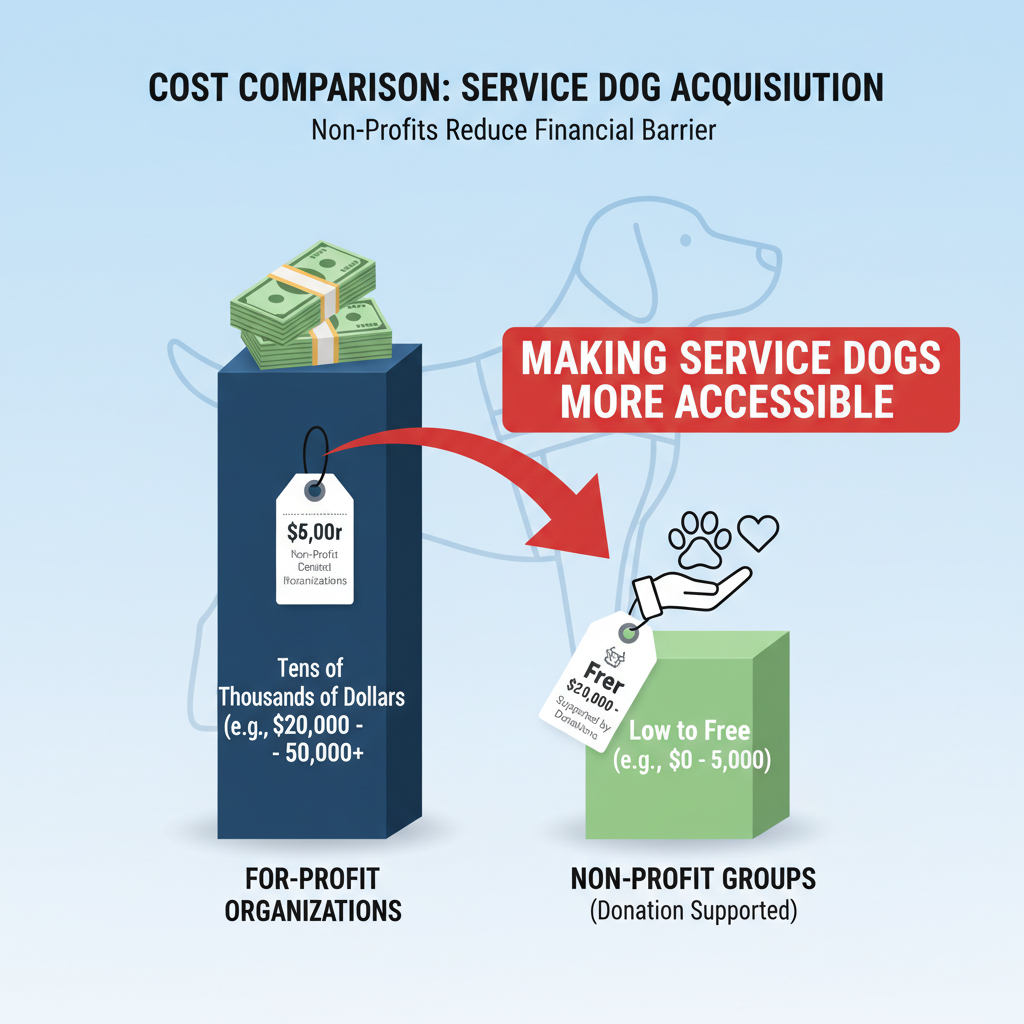
Keep in mind that getting a fully trained service dog from an organization can be expensive – often tens of thousands of dollars. That cost covers all the breeding, expert training, and care. However, many wonderful non-profit groups work hard to provide dogs at a much lower cost, or even free, thanks to generous donations.