
How to Leash Train a Dog: Your Guide to Happy Walks
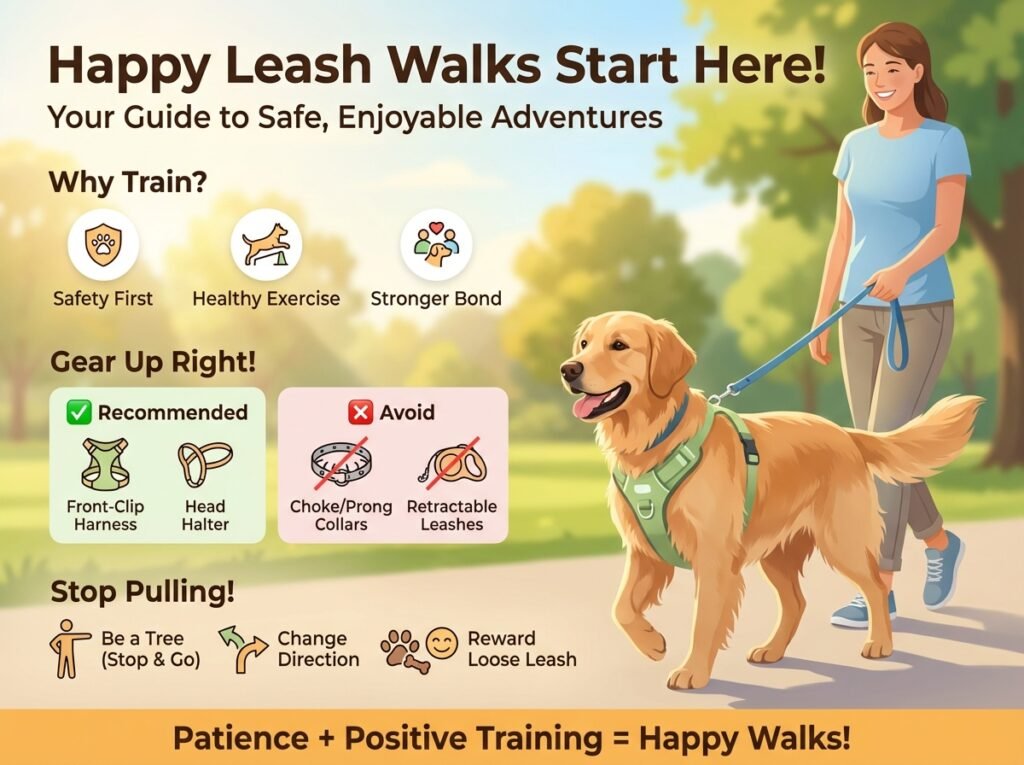
Learning how to leash train a dog is one of the most rewarding parts of being a pet parent. It’s not just about obeying the law; it’s about keeping your furry friend safe, giving them the exercise they crave, and strengthening the special bond you share. While it might seem like a big job, with a little patience and consistency, you can easily teach your pup to walk politely right by your side.
Why Walking Your Dog on a Leash Matters
There are so many good reasons to get your dog comfortable with a leash:
- Keeping them safe: A leash is like a guardian angel, stopping your dog from darting into traffic, getting lost, or stumbling into trouble with other animals or people.
- Essential exercise: Those daily walks are vital for your dog’s physical health and give their brains a much-needed workout as they sniff and explore.
- Building social skills: Regular strolls let your dog safely meet new friends – both human and furry – and explore different sights and sounds.
- Boosting good behavior: Leash training reinforces basic obedience cues and helps build trust, making your connection with your dog even stronger.
- Following the rules: Many towns and parks have leash laws, so being leash-trained means you and your dog can enjoy public spaces without a worry.
What You’ll Need Before You Start Training Your Dog to Walk on a Leash
Before you take your first step, make sure you have the right gear ready:
- Collar or Harness:
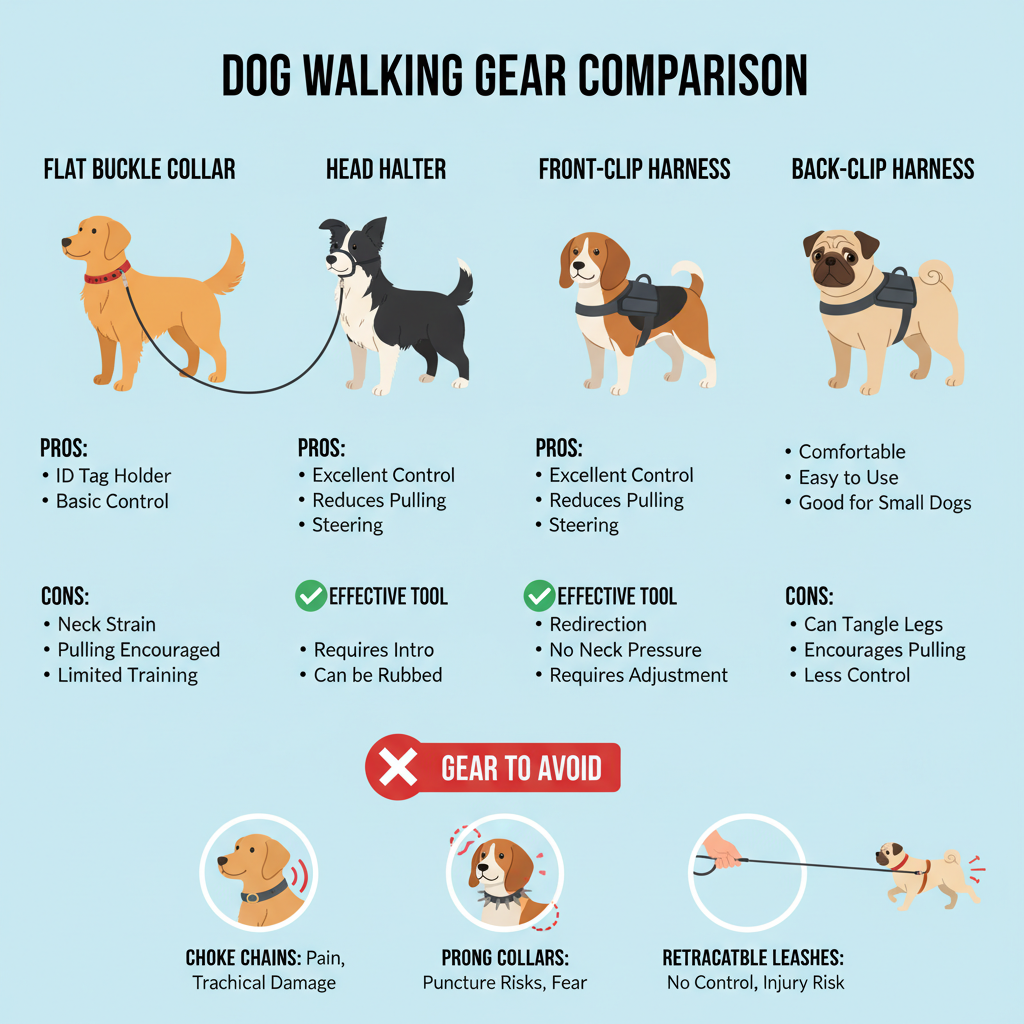
- Flat Buckle Collar: Great for holding ID tags, but it puts pressure on your dog’s throat if they pull. Not ideal for teaching polite leash manners.
- Head Halter: This gives you gentle control over your dog’s head, which in turn guides their body. It can be super effective for strong pullers but needs a calm introduction.
- Front-Clip Harness: Our team at Petscarelab generally loves these! The leash attaches at your dog’s chest, gently redirecting them back toward you if they pull. This really helps discourage bad habits.
- Back-Clip Harness: Perfect for smaller dogs or those who already walk nicely. If your dog pulls hard, though, this style can actually encourage them to lean into it more.
- What to Skip: We don’t recommend choke chains or prong collars. They can hurt your dog physically and create negative feelings about walks.
- Leash: A simple 4-to-6-foot leash made of nylon or leather is your best bet. Avoid retractable leashes; they give you less control and can be risky.
- Super Yummy Treats: Grab small, soft, irresistible treats your dog doesn’t get every day – think tiny pieces of cooked chicken, cheese, or hot dogs. These are your secret weapons!
- Plenty of Patience and Positive Vibes: This is the most crucial “equipment” you have. Keep it fun and rewarding!
Step 1: Getting Comfy with the Collar or Harness
Let’s start by making your dog feel totally at ease with their new gear inside the house. Don’t even think about the leash yet!
- Introduce it slowly: Slip the collar or harness on for just a few minutes at first, especially right before something fun like mealtime or playtime. This helps your dog connect it with happy experiences.
- Praise and reward: The moment it’s on, tell your dog what a good job they’re doing and give them a tasty treat.
- Stretch it out: Gradually increase how long your dog wears the gear until they barely notice it’s there.
Step 2: Introducing the Leash
Once your dog is a pro at wearing their collar or harness, it’s time to bring in the leash.
- Clip it on: Attach the leash to the collar or harness, still indoors.
- Let them drag it: Supervise your dog while they wander around the house with the leash trailing behind them. This helps them get used to the weight and feel. Just make sure it doesn’t get tangled on anything!
- Keep it positive: Keep those praises and treats coming while the leash is attached.
- Pick it up: Once they’re used to dragging it, occasionally pick up the leash and walk a few steps with them inside, then let go again.
Step 3: Your First Walks (Indoors & Out)
Now, let’s practice walking together with you holding the leash. This is a big step in how to leash train a dog!
- Practice indoors first:
- Find a quiet spot, like your living room, with no distractions.
- Hold the leash, then use a cheerful, encouraging voice to call your dog to you.
- When they come, celebrate with praise and a treat!
- Take a few steps. If they walk nicely beside you, even for a second, shower them with rewards.
- If they start to pull, simply stop moving. Only continue walking when the leash goes slack. This teaches them that pulling gets them nowhere fast.
- Short and sweet outdoor adventures:
- Pick a calm area with very few distractions for these initial outdoor walks.
- Keep these first outings short – 5 to 10 minutes – and focus on making them super positive.
- Consider a “Heel” command (optional but helpful): You can start saying “heel” as you step forward, rewarding your dog when they walk nicely by your side.
- Reward that loose leash: Every time your dog walks without any tension on the leash, say a cheerful “yes!” or “good!” and hand over a treat. This is key to teaching your dog to walk on a leash.
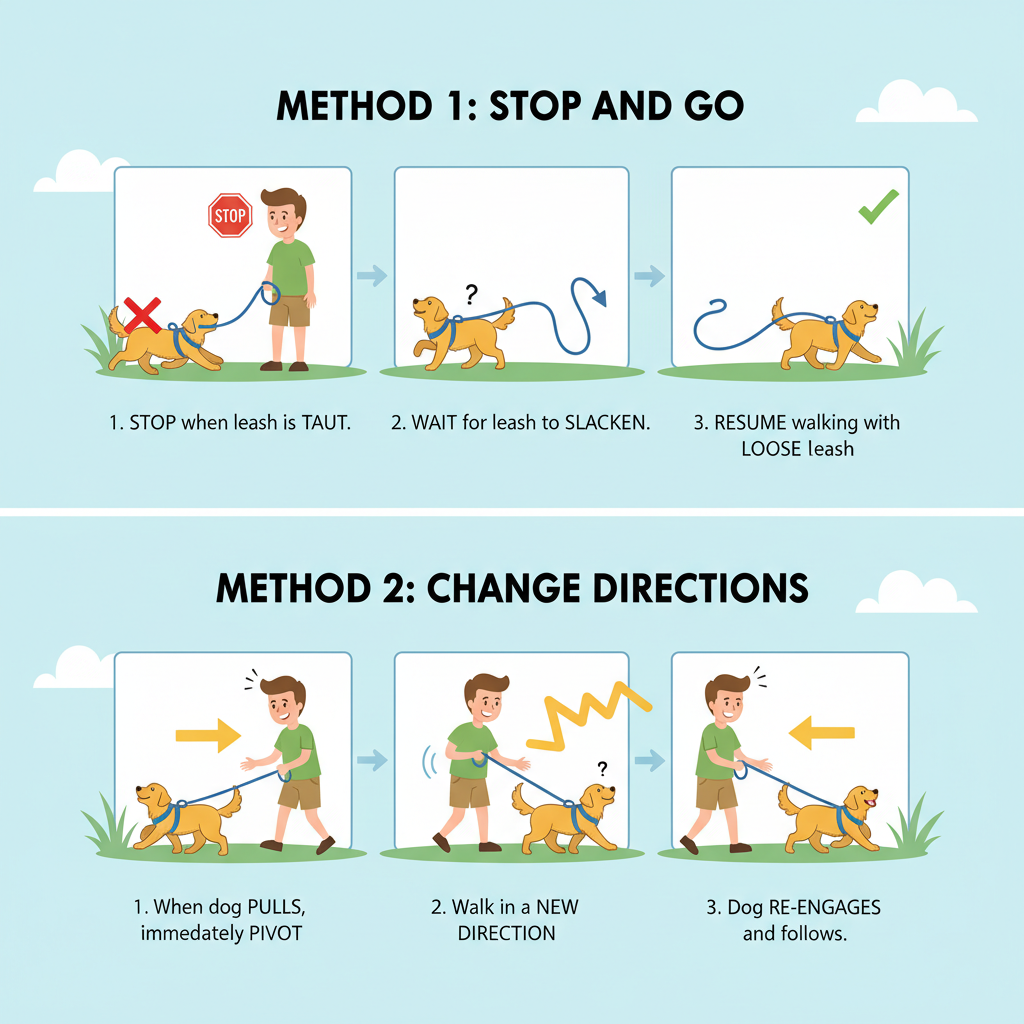
- Switch directions: If your dog starts to pull, suddenly change which way you’re going. This catches them off guard and makes them pay attention to you.
- The “Stop and Go” method: If your dog pulls, stop dead in your tracks. Don’t move until the leash loosens (your dog might look back at you, or even sit). The second the leash slackens, praise them and start walking again. Repeat this every single time they pull.
Step 4: What to Do About Pulling
Pulling on the leash is one of the toughest challenges, but totally fixable with the right approach:
- Be a tree (Stop and Go): Just like we mentioned, if your dog pulls, stand perfectly still. Don’t take another step until the leash is loose. They’ll quickly learn that pulling stops all the fun.
- Change directions: The moment your dog leans into the leash, pivot and walk the other way. This constantly reminds them to focus on you, not just charging forward.
- Heavily reward loose-leash walking: It’s not just about correcting pulling; it’s even more about rewarding not pulling. When the leash is loose, praise and treat them frequently, especially when they’re in the right spot next to you.
- Use the right gear: A front-clip harness or a head halter can be incredibly helpful tools to manage pulling while you’re training.
- Keep it calm: Yelling or jerking the leash can scare or frustrate your dog and actually damage your bond. We want happy walks, not stressful ones!
Step 5: Leveling Up Your Leash Training
Once your dog is walking well in quiet spots, it’s time to slowly increase the difficulty:
- Introduce minor distractions: Head to areas with a bit more going on—a park during a less busy time, or a calmer street.
- Go on longer walks: Gradually make your walks last a bit longer.
- Explore new places: Let your dog experience different sights, sounds, and smells, always reinforcing those good leash manners.
Our Best Tips for Success When Leash Training Your Dog
- Consistency is everything: Make sure everyone who walks your dog uses the same commands and training methods. Teamwork makes the dream work!
- Focus on the positive: Always reward good behavior with praise, tasty treats, and lots of love.
- Be patient: Teaching your dog to walk on a leash takes time. Don’t get discouraged if you don’t see instant results.
- Keep it fun: Walks should be an enjoyable adventure for both of you!
- Short, frequent sessions: Especially for puppies or easily distracted dogs, short bursts of training (5-10 minutes) are much more effective than one long, tiring session.
- Start early: It’s usually easiest to teach a puppy good leash manners, but even older dogs can absolutely learn with consistent training.
- Ask for help if you need it: If you’re really struggling, don’t hesitate to reach out to a professional dog trainer or veterinary behaviorist. Our team at Petscarelab can help you find resources.
Teaching your dog to walk politely on a leash is an ongoing journey, but with consistent effort and a positive attitude, you and your furry friend will soon be enjoying countless safe, happy, and stress-free strolls together.