

8 Common Urinary Problems in Dogs
Watching your dog struggle with peeing or seem uncomfortable is heart-wrenching. Urinary problems in dogs are incredibly common, popping up in pups of all ages and sizes. Whether it's a nagging bladder infection or something more serious like stones, these issues can really hurt your dog and lead to big trouble if you don't catch them early. Knowing what signs to look for and understanding the different kinds of urinary troubles can help you get your best friend the help they need fast.
1. Urinary Tract Infection (UTI)
A UTI is when bacteria get into your dog's urinary system. This could be anywhere from their kidneys down to the bladder. UTIs are super common, especially in female dogs, and usually start when bacteria sneak up the urethra to the bladder.
If your dog has a UTI, you might see them:
- Peeing a lot more often than usual
- Straining hard to pee
- Whimpering or crying out when they go
- Peeing blood or cloudy urine
- Licking their private parts non-stop
- Having accidents inside the house
- Running a fever
- Acting sluggish or tired
- Not wanting to eat
Most of the time, our team at Petscarelab finds that UTIs clear up with a course of antibiotics, usually lasting a week or two. Sometimes, your vet might suggest a special urine test to pinpoint the exact bacteria and find the best medicine for it.
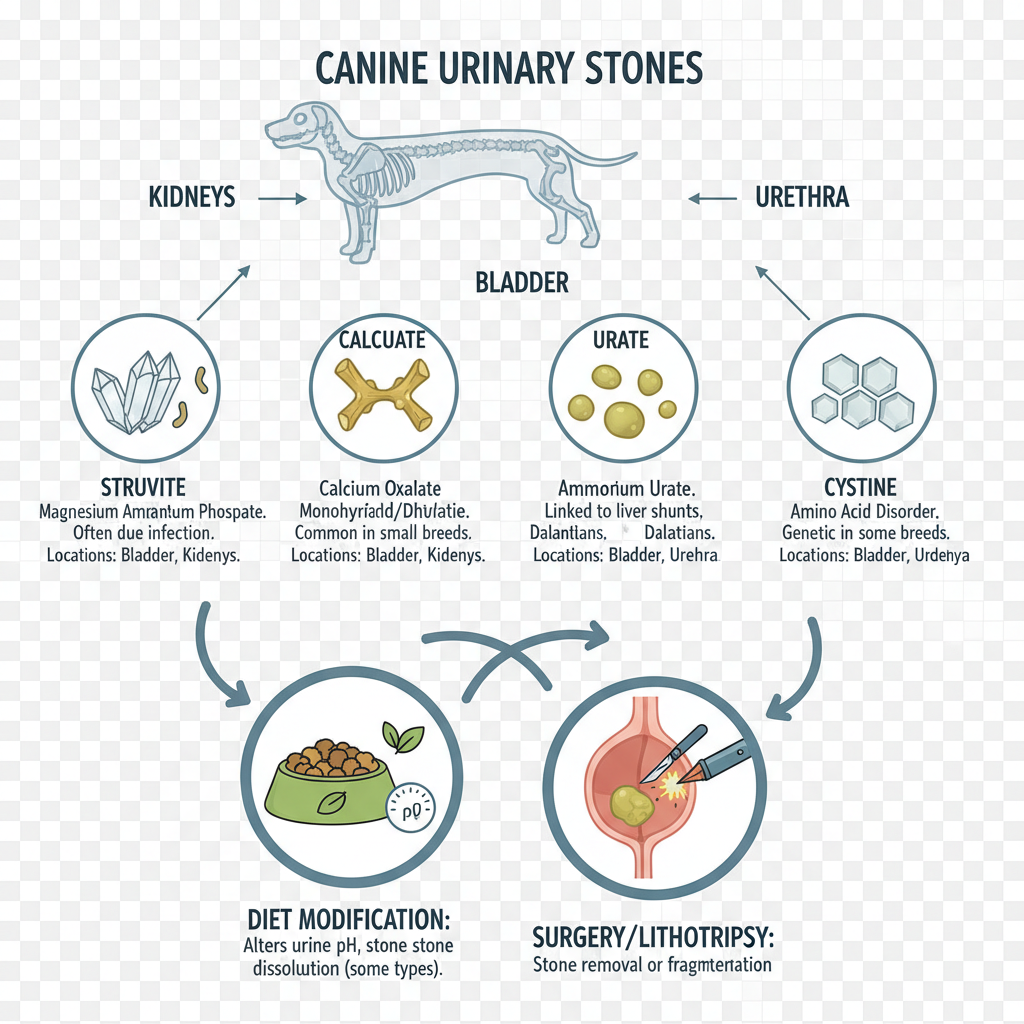
2. Urinary Stones (Urolithiasis)
Think of urinary stones like tiny pebbles that form inside your dog's urinary tract. These mineral deposits can be small or big, and they might pop up in the kidneys, bladder, or even the urethra. They're more common in certain breeds, like Dalmatians, Miniature Schnauzers, and Bichon Frises.
Signs your dog might have urinary stones include:
- Straining when they try to pee
- Going to the potty very frequently
- Bloody pee
- Accidents in the house
- A painful tummy
- Looking tired or lethargic
- Not having much of an appetite
Treating these stones depends on what kind they are, how big they've gotten, and where they are. Some can melt away with a special diet or medicine. Others, though, might need surgery to get them out. Your vet can do a urine test, X-rays, or an ultrasound to figure out what's going on.
3. Idiopathic Cystitis
While we see this more often in cats, dogs can get idiopathic cystitis too. This just means your dog's bladder is inflamed, but there's no clear reason why – no bacteria, no stones. It often flares up when a dog is feeling stressed.
Look for these signs of idiopathic cystitis:
- Peeing frequently
- Straining hard to go
- Bloody urine
- Licking their privates a lot
- Having accidents indoors
- Pain in their belly
Treatment for this problem aims to ease the symptoms and bring down stress levels. This could mean pain relievers, anti-inflammatory meds, a change in diet, or simply making your dog's environment more fun and less stressful.
4. Incontinence
Urinary incontinence is when your dog leaks pee without meaning to. It can happen at any age, but it's more common in older, spayed female dogs. There are lots of reasons for it: weak bladder muscles, hormonal imbalances, even spinal cord issues.
You might notice your dog:
- Leaking urine while sleeping or resting
- Waking up to wet spots where they've been lying
- Constant dribbling of pee
- Wet fur around their private area
The treatment really depends on what's causing the leakage. Options include medicines (like estrogen for hormonal issues), surgery, or simple management tricks like more frequent potty breaks and doggy diapers.
5. Kidney Disease
Your dog's kidneys are amazing; they filter out all the junk from their blood and keep their body fluids balanced. Kidney disease happens when these vital organs stop working right. It can come on suddenly (acute) or get worse slowly over time (chronic).
Signs of kidney disease can include:
- Drinking and peeing a lot more
- Losing their appetite
- Dropping weight
- Vomiting
- Acting super tired
- Having really bad breath (a sign of toxins building up)
Treating kidney disease focuses on managing the symptoms and trying to slow its progress. This often means special diets (low protein, low phosphorus), medicines to control blood pressure or nausea, and sometimes even fluid therapy. Regular check-ups help your vet keep an eye on their kidney function.
6. Bladder Tumors
Bladder tumors, often called transitional cell carcinoma (TCC), are cancerous growths that form in the bladder. TCC is the most common kind of bladder tumor in dogs and tends to affect older pups, especially breeds like Scottish Terriers, West Highland White Terriers, and Beagles.
Symptoms of bladder tumors often look a lot like a UTI:
- Straining to pee
- Frequent urination
- Bloody urine
- Trouble peeing at all
- Pain while peeing
Diagnosing bladder tumors usually involves a urine test, imaging like ultrasounds or X-rays, and often a biopsy. Treatment might include surgery, chemotherapy, radiation, or a combination, depending on how far along the tumor is and where it's located.
7. Prostatitis (Male Dogs)
Prostatitis is when the prostate gland, which sits near the bladder in male dogs, gets inflamed or infected. This can be sudden or chronic and often stems from bacterial infections. Unneutered male dogs are more likely to deal with this.
Signs of prostatitis include:
- Trouble peeing
- Straining hard to go
- Painful urination
- Bloody urine or semen
- Fever
- Acting tired
- Pain in their back end or belly
- Walking stiffly or not wanting to move
Treatment for bacterial prostatitis usually means antibiotics, along with anti-inflammatory drugs and pain relievers. Neutering your dog is often a smart move to prevent it from coming back and to help with an enlarged prostate.
8. Urethral Obstruction
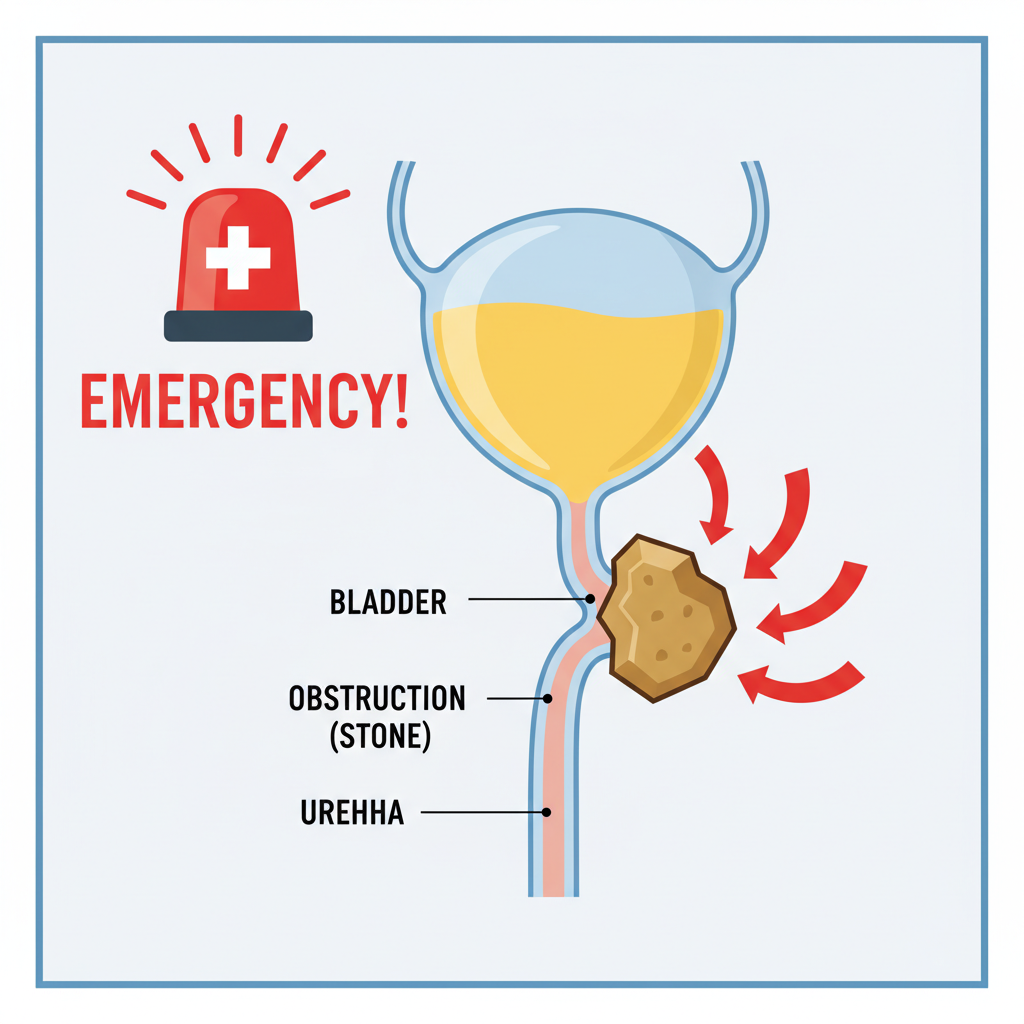
A urethral obstruction is a terrifying emergency where the tube that carries pee out of the body gets completely blocked. This blockage can be caused by urinary stones, tumors, blood clots, or severe swelling. Male dogs are more at risk because their urethra is narrower.
If your dog has a urethral obstruction, you'll see:
- They can't pee at all, or only tiny drops come out
- Intense straining to pee with no success
- A painful, hard belly
- Vomiting
- Extreme tiredness
- Collapsing
- A swollen, painful bladder
This is a critical emergency! If you suspect a urethral obstruction, get your dog to an emergency vet immediately. Our team says treatment involves clearing the blockage, usually with a catheter, then figuring out what caused it. Without quick help, it can lead to kidney failure and even death in just a day or two.
When to See Your Vet
If you spot any of these signs of urinary problems in dogs, don't wait. Call your vet right away. Catching these issues early and getting treatment quickly can save your dog from a lot of pain and prevent more serious health problems. Your vet can do a full check-up, run some tests, and create the best plan to get your dog feeling like themselves again.